

Booking a cab for an outstation trip usually comes down to one question: do you pay for a one way taxi, or does a round trip taxi work out cheaper once everything is added up? The honest answer is that it depends on your travel plan, not on which option “sounds” cheaper. Below is a practical breakdown to help you make a smarter cab booking decision the next time you're planning intercity travel.
What a One Way Taxi Actually Costs You
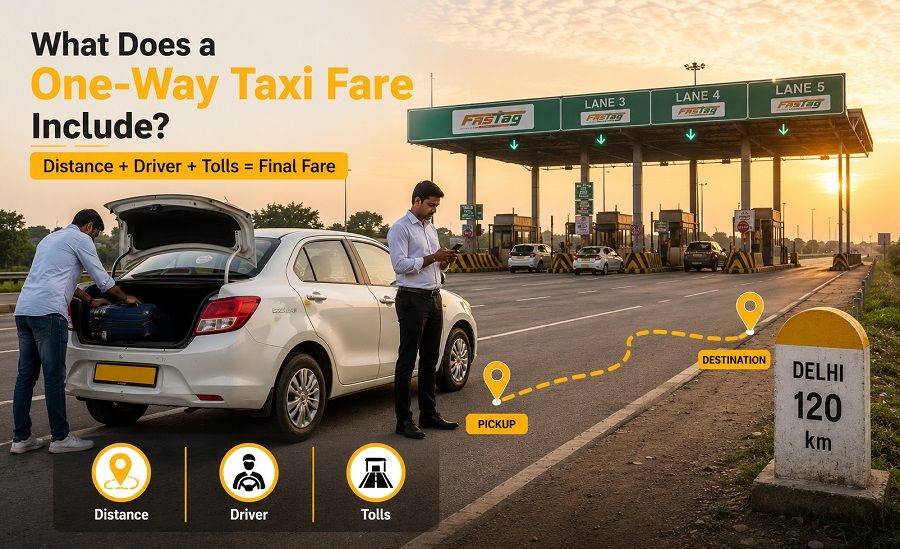
A one way cab charges you only for the distance from your pickup point to your drop point. On paper, this looks like the budget-friendly choice, and for many trips it genuinely is. But most operators also add a return empty-run charge, since the driver has to bring the car back without a paying passenger. This is why a one way taxi from, say, Agra to Delhi rarely costs exactly half of what a round trip would cost. It's usually somewhere between 55% and 65% of the round trip fare saving you a lot of money.
That said, a one way taxi still makes sense when:
- You're traveling to a city and flying or taking a train back
- You only need transport for a single leg of the journey
- Your onward travel dates aren't fixed yet
If your trip fits any of these, searching for “one way taxi booking near me” will almost always beat paying for a full round trip taxi.
When a Round Trip Taxi Is the Smarter Buy
A round trip taxi bundles your onward and return journey into a single fare, and operators price it lower per kilometre than two separate one-way bookings. If you're visiting a destination for two or three days and returning to the same city, this option usually wins on cost.
There's also a convenience factor that's easy to underestimate: the same driver and cab wait for you at your destination, so you skip the hassle of arranging a fresh cab booking for the return leg. For outstation cab trips involving multiple stops like family trip covering two or three towns before heading home the round trip pricing almost always comes out ahead of stacking multiple one way cab fares.
Hidden Charges That Change the Math
Whichever you choose, ask about these before confirming any intercity taxi booking:
- Driver allowance: A daily charge, usually applicable on round trips with overnight stays
- Toll and state permit charges: Billed separately on both one way and round trip fares
- Night halt charges: Added if the cab waits overnight for a return trip
- Minimum kilometre clause: Many round trip taxi packages have a minimum daily km cap; going over it adds extra cost
Operators that hide these in the fine print are the real reason people feel “cheated” after paying for outstation cabs. Reading the fare breakup before booking saves more money than choosing between one way or round trip in the first place.
A Simple Way to Decide
Ask yourself one question: are you coming back the same way you went? If yes, and it's within a few days, a round trip taxi is usually cheaper per kilometre. If you're only travelling one direction, or your return date is uncertain, book a one way taxi and arrange your return separately.
FAQs
Is a one way taxi always cheaper than a round trip taxi?
Not always. It's cheaper for single-direction travel but can cost more per kilometre due to return empty-run charges.
Do outstation cabs charge for the driver's return journey?
Most one way cab bookings include a partial return charge, since the driver drives back without a fare.
What documents are needed for intercity taxi travel?
A valid ID proof is generally required at pickup, and some routes may need permit papers, which the operator usually handles.