

What is the real problem pet owners face?
Booking a normal taxi with a pet is stressful. Many drivers refuse the ride on the spot. Some cars have no real space for a carrier. Others quietly charge extra once the pet is already inside.
Real scenario 1: Take a dog owner in Delhi, for example. Booked a cab for the vet, driver shows up, sees the dog, and bails. Owner's stuck with a sick pet, no ride.
Real scenario 2: The cat owner in Mumbai heading to the airport. Driver agrees on the phone, then slaps on a "cleaning charge" at pickup with no mention of it before.
Real scenario 3: A family in Pune driving to Goa with their dog? They booked a normal outstation car, but halfway there realized the driver hadn't factored in any stops for water or bathroom breaks.
These kind of things happen all the time. It feels like pet travel is just an afterthought, not a real service. Know which service fits your trip? Book a pet-friendly taxi that matches your journey.
Book a Pet-Friendly TaxiTable of Contents
- Why Do People Get Confused About Pet-Friendly Taxis?
- What Is a Pet-Friendly Taxi? (Option A)
- What Is a Long-Distance Taxi for Pet Travel? (Option B)
- Do Dogs and Cats Need Different Taxi Arrangements?
- Quick Comparison: City Pet Taxi vs Long-Distance Pet Taxi
- Real Examples in Different Situations
- What Factors Should Affect Your Decision?
- What Should You Check Before Booking?
- Are Documents Needed for Interstate Pet Travel?
- Pros and Cons of Each Option
- When Should You Choose a City Pet Taxi?
- When Should You Choose a Long-Distance Pet Taxi?
- How Can You Prepare Your Pet Before the Ride?
- How Can You Save Money on Pet Taxi Rides?
- What Mistakes Do People Commonly Make?
- What Are Red Flags to Watch For When Booking?
- Conclusion
- FAQs
Why do people get confused about pet-friendly taxis?
Most people assume "any cab" will work for a pet. That assumption is where the trouble starts. Pet travel is not one single service, it has different types, and each type suits a different situation.
Confusion usually comes from these reasons:
- Ride apps rarely show pet policy clearly before booking
- "Pet-friendly" means something different for every operator
- People don't realise city rides and long-distance rides for pets are not the same service
- Dog owners and cat owners often need slightly different arrangements, but this is rarely explained anywhere
- Pricing is not standard, so people don't know what a fair charge looks like
This guide breaks all of this down simply, so you know exactly what to expect before you book.
What is a pet-friendly taxi? (Option A)
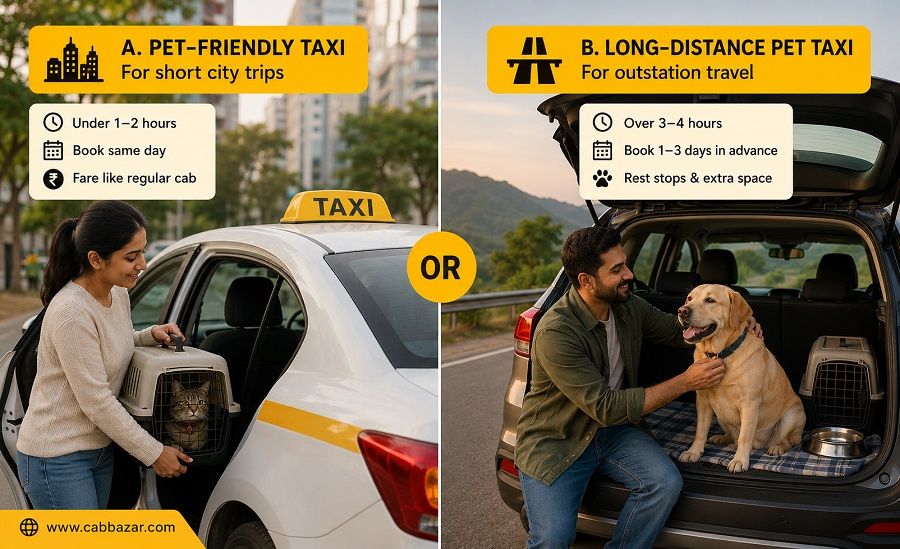
A pet-friendly taxi is simply a regular city cab where the driver and vehicle are comfortable carrying a pet. It is built for short, everyday trips inside the same city.
Example: Priya lives in Bangalore. Her cat needs a vet visit 6 km away. A pet-friendly taxi is the right choice here as they are quick, affordable, and no special planning needed.
Key features:
- Used for short trips, usually under 1–2 hours
- No special vehicle setup required
- Can often be booked the same day, sometimes instantly
- Fare is close to a normal cab, sometimes with a small pet charge
- Driver is informed about the pet before pickup
What is a long-distance taxi for pet travel? (Option B)
A long-distance pet taxi is booked for outstation trips meaning travelling between cities. Families use this when relocating, going on a holiday, or attending an event far from home with their pet with them.
Example: Rohan is relocating from Pune to Hyderabad with his Labrador. He books a long-distance taxi in advance, with rest stops planned so the dog can walk and drink water on the way.
Key features:
- Used for trips over 3-4 hours, usually between cities
- Needs advance booking, ideally 1-3 days ahead
- Rest stops and travel time are planned in advance
- Higher fare, often a fixed package price
- Vehicle may include extra space for carriers, food, and bedding
Do dogs and cats need different taxi arrangements?
This is a fair question, and the simple answer is: mostly the same taxi with slightly different handling. Both dogs and cats can travel in a pet-friendly taxi or a long-distance taxi. The difference is in comfort other then the type of service.
Example: Ananya in Chennai has both a dog and a cat. For the dog, she books a taxi with extra floor space, since he likes to sit rather than stay in a carrier. For the cat, she books the same type of taxi but keeps the cat in a covered carrier the whole ride as cats feel safer that way.
For dogs:
- Larger dogs may need more floor or seat space
- Calm dogs can often travel without a carrier, on a leash
- Anxious dogs benefit from a blanket or their usual seat cover
- Longer trips need water and toilet breaks
For cats:
- Cats almost always travel better inside a covered carrier
- Sudden noise or open windows can stress a cat quickly
- Cats rarely need toilet breaks on short trips, but long trips need a small litter setup
- A familiar towel or toy inside the carrier helps reduce anxiety
Quick comparison: City pet taxi vs long-distance pet taxi
Before comparing, know what exactly is being compared: how each option handles trip length, booking time, cost and comfort for the pet. This helps you match the option to your actual trip, not just the label.
| Factor | Pet-Friendly City Taxi | Long-Distance Pet Taxi |
|---|---|---|
| Best for | Vet visits, grooming, short errands | Relocation, holidays, family visits |
| Trip length | Under 1–2 hours | 3+ hours, cross-city |
| Booking time needed | Same day | 1–3 days in advance |
| Rest stops | Not needed | Planned in advance |
| Typical cost | Close to normal fare, small pet charge | Higher, often fixed package |
| Vehicle setup | Basic, no changes | May include seat covers, water breaks |
| Advance documents needed | Usually none | May need health certificate for interstate travel |
Real examples in different situations
Situation 1
Vet visit in Mumbai: Need to reach a vet in Mumbai same day? Get a pet-friendly taxi, easy. It's there fast. You don't have to plan ahead for that at all.
Situation 2
Airport drop in Chennai: Flying out of Chennai? You get a taxi to take you and your dog in its carrier. But you still check the airline rules yourself, which makes sense.
Situation 3
Relocation from Delhi to Jaipur: Moving from Delhi to Jaipur with a dog? Booked a trip far away, asked the driver to stop halfway so the dog could move.
Situation 4
Weekend trip to Goa from Pune: A couple took their dog for a short holiday. They picked a longer taxi, one with room for their stuff, and made sure the pet policy was clear beforehand. The trip was over six hours, so that felt necessary.
Situation 5
Two pets, one trip in Hyderabad: A user needs to carry a dog and a cat together to a new groomer. They book a pet-friendly taxi in advance and mention both pets, so the driver keeps a carrier space ready for the cat and floor space for the dog.
Situation 6
Overnight trip from Bangalore to Coimbatore: Overnight trip from Bangalore to Coimbatore? They got a long-distance taxi. They checked with the driver about stopping every few hours because the old dog needed breaks. It bites a little that older pets need more care, but that's just how it is.
What factors should affect your decision?
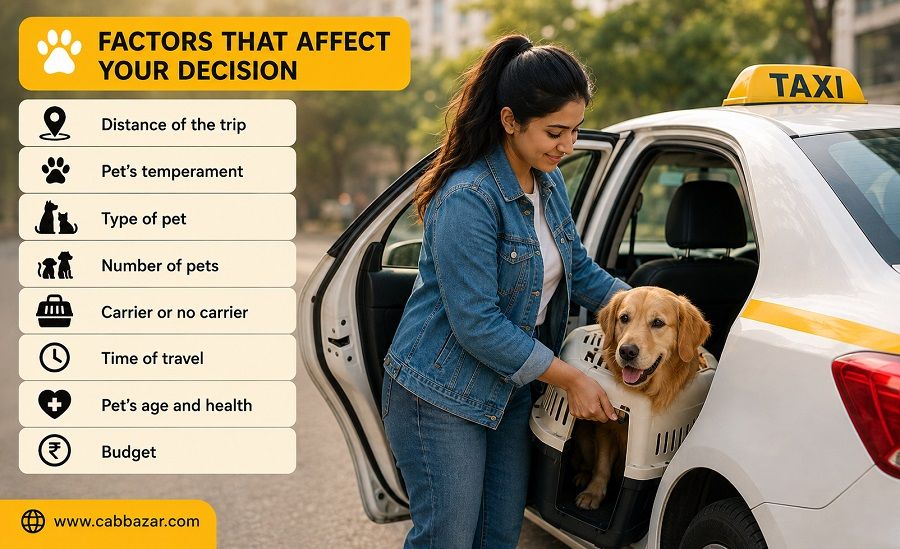
Not every pet owner has the same needs. These factors decide which option actually fits:
- Distance of the trip: short city trip or cross-city travel
- Pet's temperament: calm pets travel easier than anxious ones
- Type of pet: dogs and cats have different comfort needs
- Number of pets: more pets need more space
- Carrier or no carrier: some cabs require a carrier by rule
- Time of travel: night travel needs a driver comfortable with longer, quieter drives
- Pet's age and health: older or unwell pets need more frequent breaks
- Budget: city taxis cost less than long-distance packages
What should you check before booking?
A quick checklist saves most of the common problems people face. Go through this before you confirm any ride:
- Confirm the driver knows about the pet, not just the operator
- Ask if a carrier is required or optional
- Ask about any extra pet charge, in writing if possible
- For long trips, confirm rest stop plans
- Check the cancellation policy in case the driver isn't comfortable at pickup
- For interstate trips, check if any pet documents are needed
Are documents needed for interstate pet travel?
For most in-state, same-city trips, no documents are needed. For inter-state travel especially longer routes, it helps to carry basic pet health records.
Example: A family driving from Delhi to Chandigarh with their dog carries a recent vaccination certificate. It isn't always checked, but having it avoids any issue at checkpoints or hotel stays along the way.
Good practice for interstate trips:
- Carry a recent vaccination certificate
- Carry basic medical records if the pet has any condition
- Keep a printed or digital copy, not just a photo on the phone
- Check if the destination state or hotel has any specific pet entry rule
Pros and cons of each option
Pros of a pet-friendly city taxi
- Fast to book, often within minutes
- Costs about the same as a normal ride
- No advance planning required
- Ideal for regular errands like vet visits or grooming
Cons of a pet-friendly city taxi
- Not built for long hours on the road
- Limited space if you're carrying pet luggage too
- Some drivers may still hesitate without prior notice
- Not ideal for anxious pets on longer routes
Pros of a long-distance pet taxi
- Rest stops are planned, better for the pet's comfort
- More space for carriers, food, and luggage
- Driver is informed and prepared in advance
- Better suited for multi-hour or overnight travel
Cons of a long-distance pet taxi
- Costs more than a regular city ride
- Needs advance booking, not ideal for last-minute plans
- Fewer operators offer this compared to city cabs
- May require confirming pet policy details ahead of time
When should you choose a city pet taxi?
Choose this when your trip is short and inside the same city. It works well for:
- Vet appointments
- Grooming sessions
- Short visits to family or friends nearby
- Same-day, unplanned trips
When should you choose a long-distance pet taxi?
Choose this when you're crossing cities or traveling for several hours. It works well for:
- Relocating to a new city
- Weekend or holiday trips
- Attending events in another city
- Trips where your pet needs rest breaks
How can you prepare your pet before the ride?
A little preparation makes any taxi ride smoother, whether it's a short city trip or a long journey.
- Feed your pet 1–2 hours before the ride, not right before
- Carry water and a small bowl for longer trips
- Keep a familiar blanket or toy in the carrier
- Take dogs for a short walk before a long trip, so they're calmer
- Keep the carrier or leash ready at the door, so pickup is quick
How can you save money on pet taxi rides?
- Book city rides during non-peak hours for lower fares
- For long-distance trips, book a few days early to lock a better rate
- Ask about round-trip pricing if returning the same week
- Compare a couple of operators before confirming, prices can vary
- Ask if multiple pets are charged as one group rate or separately
What mistakes do people commonly make?
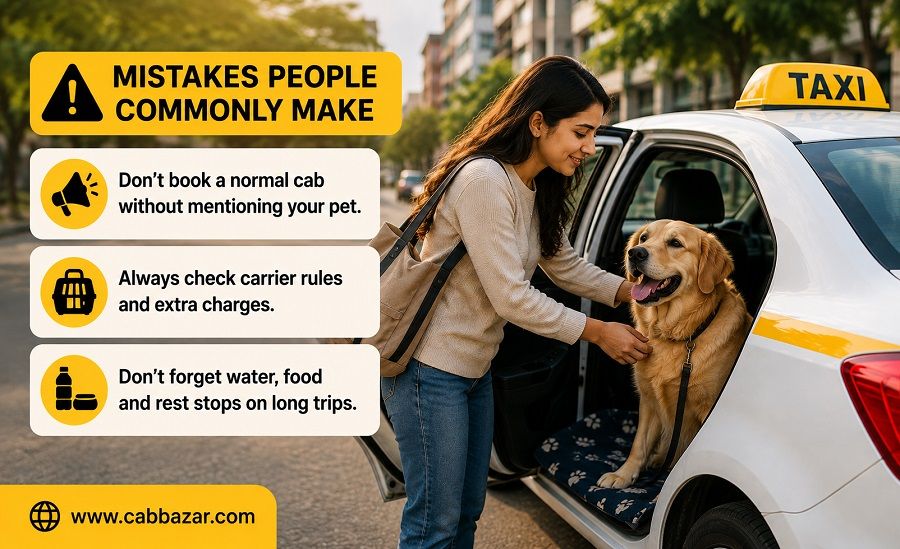
- Booking a normal cab without mentioning the pet at all
- Assuming every "pet-friendly" tag means the same service
- Not asking about carrier rules before the ride arrives
- Skipping rest stop planning on long trips, which tires the pet
- Not checking cancellation policy in case the driver refuses last minute
- Forgetting water or food for trips longer than 2 hours
- Not confirming extra charges before the ride begins
What are red flags to watch for when booking?
Most pet taxi bookings go smoothly, but a few warning signs are worth knowing:
- Operator avoids giving a clear price before the ride
- No confirmation that the driver was actually told about the pet
- Vague answers about carrier rules or extra charges
- No cancellation option if the driver refuses at pickup
Conclusion
There is no one perfect option for pet travel. A quick vet visit needs a pet-friendly city taxi. A cross-city move or holiday needs a long-distance pet taxi. Dogs and cats can both use either option, just with slightly different comfort needs. Match the service to your trip, prepare your pet a little in advance, and the ride will be smooth for both of you. Your pet's next journey doesn't have to be stressful. Choose the right taxi, plan ahead, and travel together with confidence.
Install App & Book Pet-Friendly TaxiFAQs
Is every city Taxi trip going to require a pet carry?
No but all long-distance pet taxi travel will require, and demand, carriers.
Does this work the same with cat and dog taxi service?
Yes the booking process remains exactly the same and only includes adding your type of pet. This allows for better preparation of the taxi with proper accessories/carrier if needed.
Is the long distance taxi going to be safe with a frightened animal?
Yes if rests are planned according to the animal's needs, if they feel secure enough to use a normal, familiar carrier, or are just used to the traveling. Discuss a bit with the dispatch operator and make sure the appropriate car will be sent.
Do all drivers welcome pet taxi animals in their cab?
Not all. Some are still reluctant so do inquire to make sure a proper taxi will pick your animal up from the outset, and don't assume a non-pet friendly driver on arrival.
Does a long distance pet taxi cost more than a non-pet related journey?
It tends to cost a bit more because the additional steps associated with long distances and potentially preplanned rests, in addition to preparing the right taxi, account for higher pricing to provide additional comfort for your animal.
Is it possible to use a taxi with two animals?
Typically yes as you will indicate there is more than one pet, which the operator will allow a large enough cab and properly configured carrier.
Does it required paperwork to take an animal on city trips?
Typically no, unless you're going long distance which may include a vaccination certificate.
How is an uneasy animal to be handled during city transit?
Make sure the animal is close to the owner, maybe bring along a familiar toy or blanket. You should also not have loud noises.
Can older/sick animals use the long distance taxi service?
Yes with the appropriate number of rests, it should be mentioned during the booking process if your pet is old or unwell.