

Spiti, the winter paradise of North India, is among the best and most thrilling places to visit in November and December. It transforms itself into a dreamy, snow-blasted desert paradise and captivates the travelling mind. There are places to relax, and then there are places that are meant to make the journey a part of the experience. Welcome to Spiti Valley.
Spiti, situated in the cold desert of Himachal Pradesh, will take you far away from our typical idea of a hill station. On reaching here, you will find enormous mountains, which seem to be cracked and waterless, serpentine roads, hay-covered land, tiny villages, monasteries and rivers flowing through broad valleys. Few villages will be so deserted that you stop just to enjoy.
Travel to Spiti Valley is not like you pack your bags and just set out. It is a long and challenging journey by road, passing through extreme altitudes and climates that can impact your travels. But if you like road trips and mountain scenery, and want to disconnect from crowded tourist towns, Spiti is worth considering with our Spiti cabs.
In this guide, we will explore all the best places to visit in Spiti Valley, when you should visit, how to plan your trip and a few tips to have in mind before you leave.
Best Places to Visit in Spiti Valley
Spiti is definitely one of the unspoiled places of time and has a living heritage on the deserted land. There are many villages and places of interest distributed all over a vast mountain area. Some are popular for their monasteries and others for their odd landscapes and heights.
Here are the places you should consider adding to your itinerary.
1. Kaza
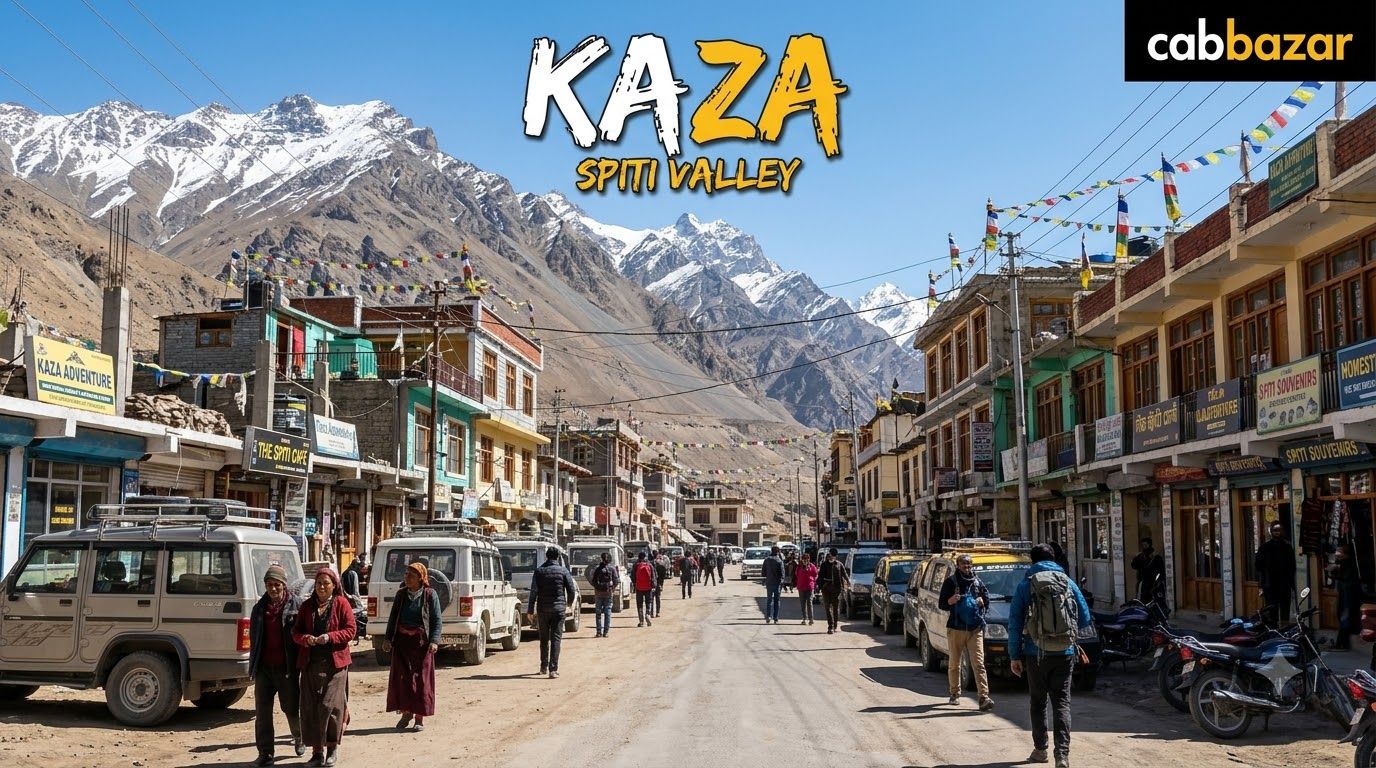
Kaza is also one of the most important and worth-visiting places here. It is the largest town and a popular tourist destination and base for a Spiti Valley trip. Most of the travellers begin their Spiti Valley journey from here.
It is known for its monasteries, such as the Key Monastery, which offers breathtaking views and a surreal Buddhist atmosphere. There are guesthouses, cafés, small shops, fuel stations, and amenities. After long hours on mountain roads, Kaza is also a nice town to stop over and organise the next leg of your trip.
Stroll through the local market, sample the food at a tiny eatery or just enjoy the mountain views. Don't expect hill-twoness in Kaza. It's quiet here, and that's how we like it!
2. Key Monastery

Key Monastery is among the most popular sights in the valley. The monastery is renowned for its sacred Tangyur texts and ancient paintings.
Set on the top of the volcanic hill dominating the Spiti River, the location of the monastery is quite dramatic. You will see the white buildings perched high against the barren brown mountains on your way to the monastery. It is a welcome change from the green mountains.
On arrival, there are prayer halls, Tibetan artwork and religious items to see. All these are what make this monastery a centre of Tibetan Buddhist knowledge and culture. Visitors should dress appropriately and follow local guidance during their visit. If you're based in Kaza, Key Monastery is a simple detour during your sightseeing adventures.
3. Kibber Village
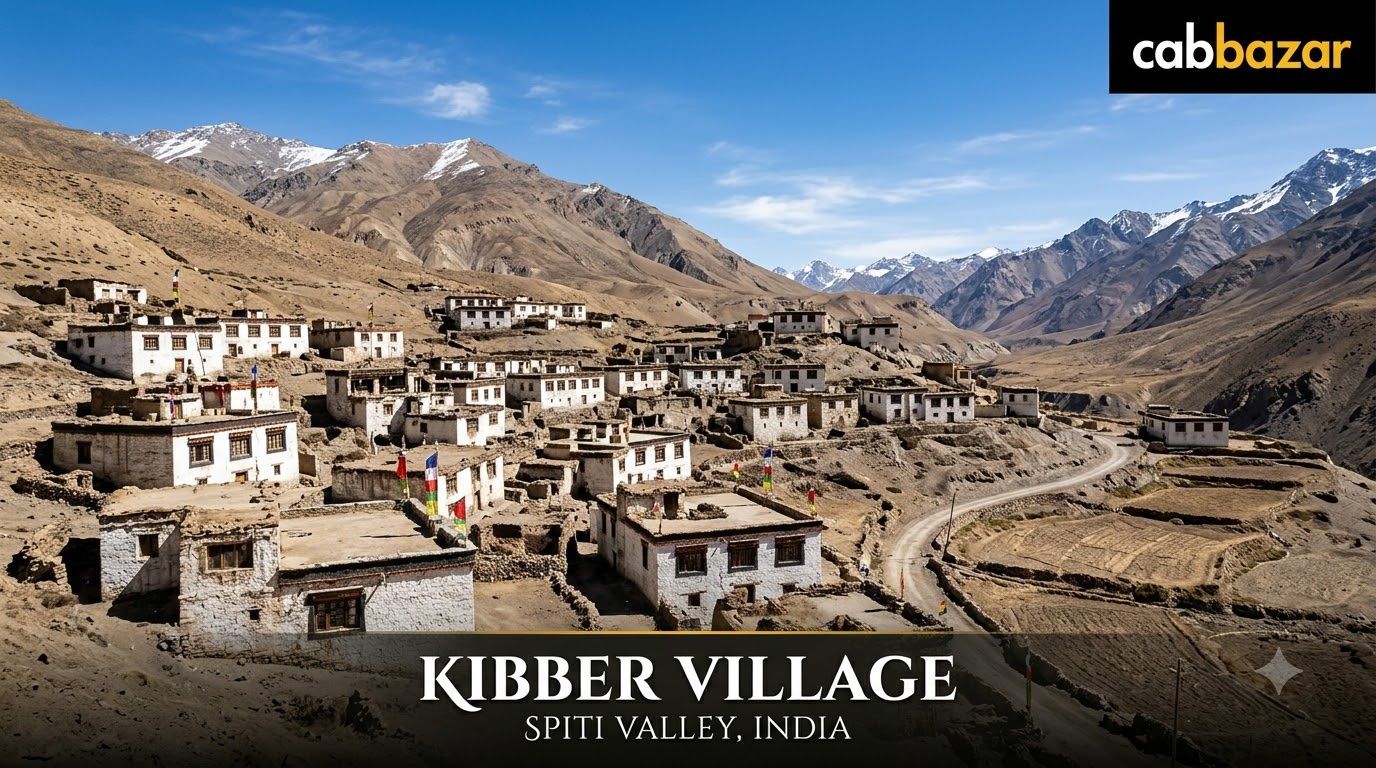
Spiti is known for its natural beauty; one such place to witness its exceptional, unadulterated beauty is Kibber Village. Located at high altitude near Kaza, it is known for its mountain setting, traditional houses and wide views of the surrounding landscape.
This village hosts numerous high-altitude treks and wildlife tourism. At this very spot, you can witness the awe-inspiring animals and their natural habitat, snow leopards, at the Kibber Wildlife Sanctuary.
You don't have to plan a long list of things here. Take a walk through the village, take in the look of old architecture and just sit for a while staring at the mountains. Kibber is also a great stop if you want to go to Chicham Bridge.
4. Chicham Bridge
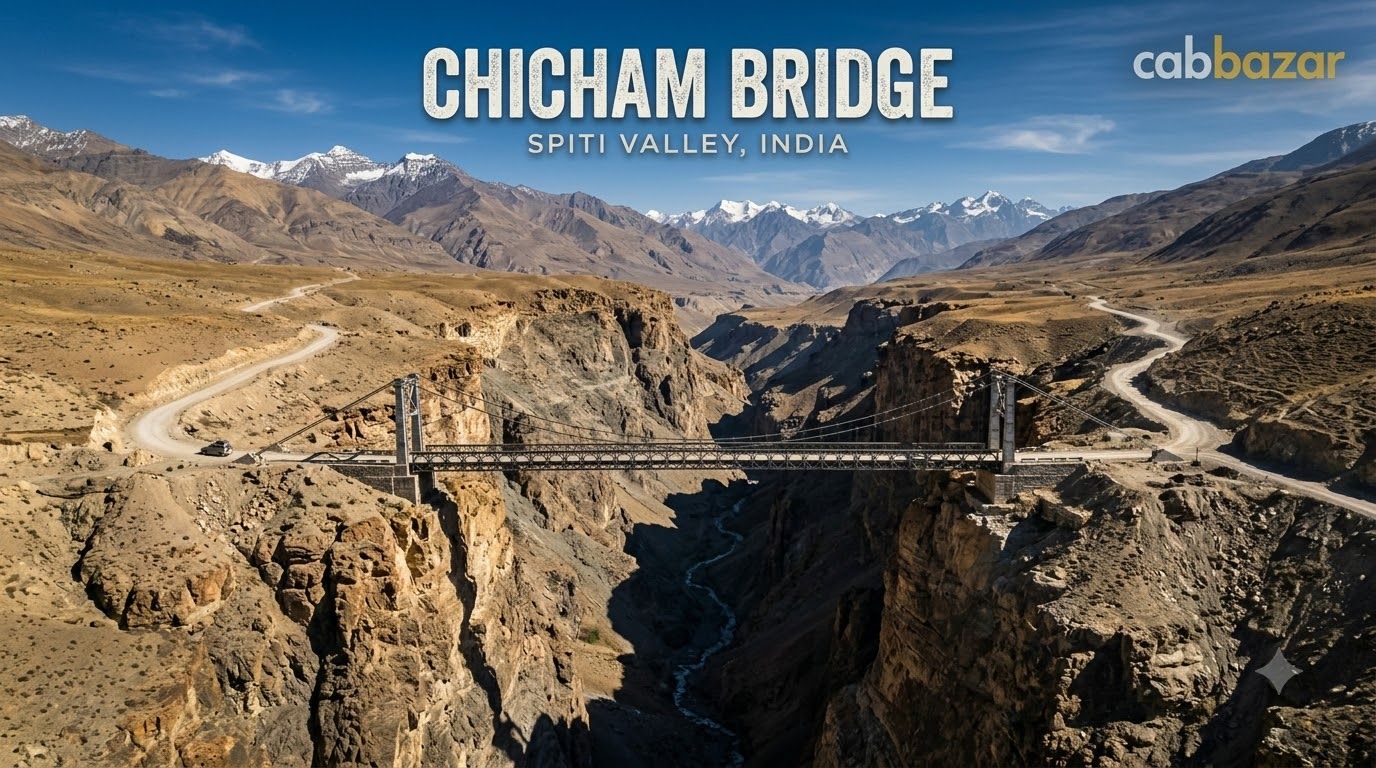
You could also try the other fascinating Sightseeing places near Kibber by visiting Asia's highest suspension bridge, Chicham Bridge. This bridge lies between the villages of Chicham and Kibber over a deep gorge.
The bridge is a magnet for intrepid travellers who get their adrenaline rush from epic mountain scenery and photography. Gazing down into the gorge tells you a lot about how raw this part of the world is.
You can also visit it during a day trip from Kaza. The drive is scenic, and the surrounding landscape changes as you move between the villages. Be careful while taking photographs. Stay within safe areas and avoid leaning over barriers for a better view.
5. Langza Village
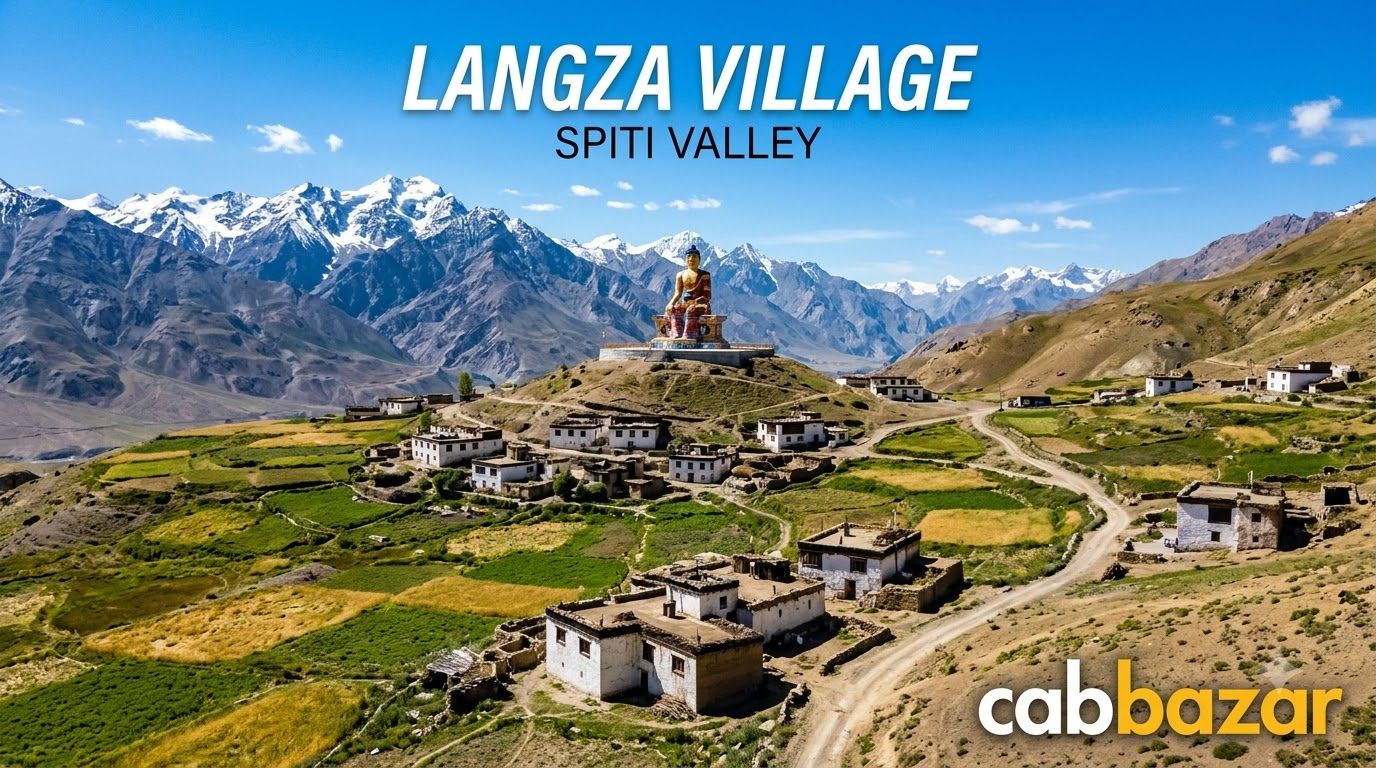
Another attraction that is worth visiting in your Spiti Valley tour is the Langza village. It is probably the prettiest of the villages you will see in your Spiti Valley tour. It is a secluded village famous for its giant Buddha statue, marine fossils, hand-woven cotton carpets, shawls and pottery.
The statue is now one of the most photographed attractions in the area. In the background, the mountain slopes are bleak, and it's as if the valley stretches on forever when there's a bright, clear day. The exciting thing is that this part of the world was once home to the Tethys Sea, and fossils give a glimpse into that time period.
Take your time here. Walk around the village, enjoy the views and speak with local residents if you get the opportunity.
6. Hikkim Village
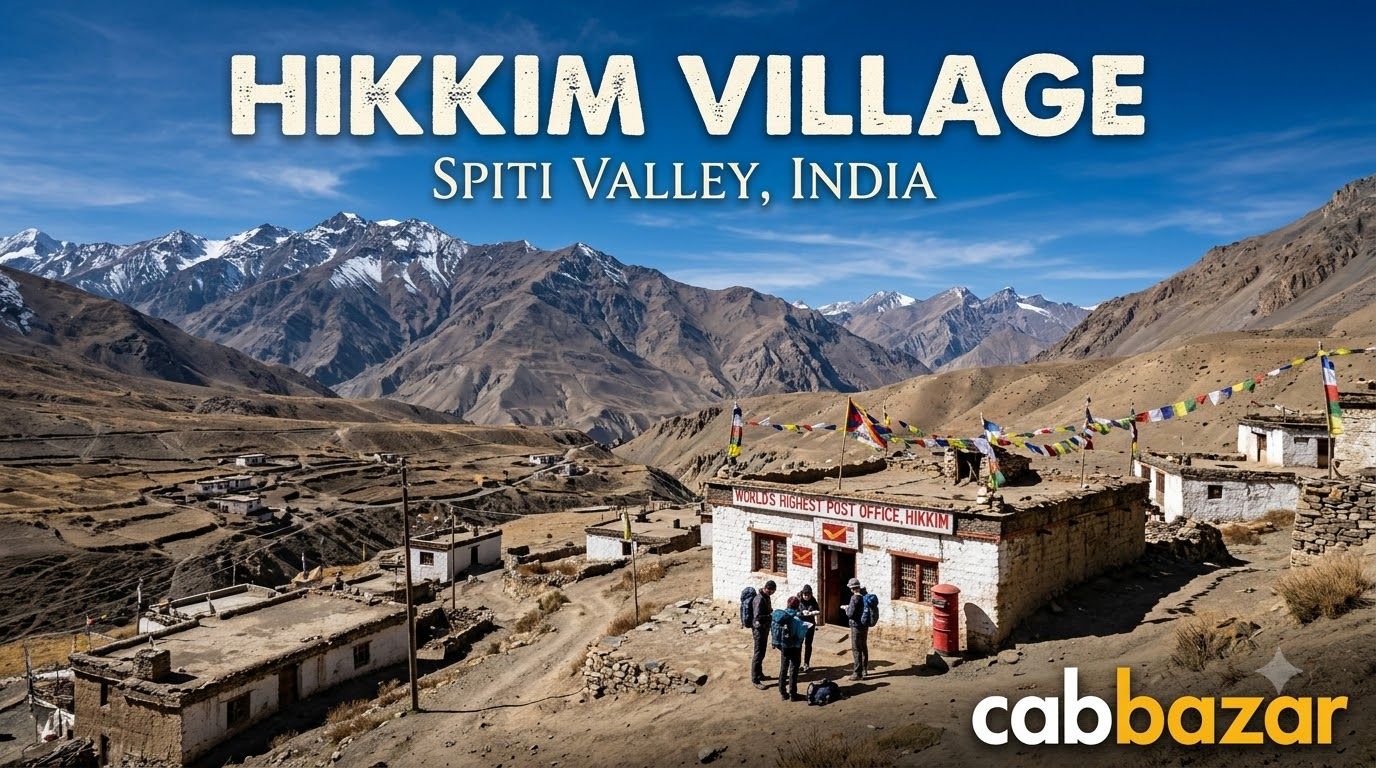
Near Langza is the Hikkim village. It is also known for its post office, which is the world's highest postal office, and that is why it is visited by visitors from all over the country.
Despite the fact that it sounds like a little activity, getting a postcard from one of the Himalayan remote villages is a nice reminiscence of travelling. Throughout the road, you can enjoy the road to Hikkim, that in addition goes via a dry mountain surroundings and few little villages. You can tie it with Langza and Komic in a single sightseeing day from Kaza.
Post office services and opening hours may vary, so don't make a tight schedule around sending a postcard.
7. Komic Village
Komic is a lesser-visited village of the high-altitude regions. It boasts of its proximity to nature, mountain scenery and the major Tourist attraction of the Tangyud Monastery. Komic is an offbeat and quiet place to stay.
The drive itself is an adventure as it winds its way along desolate mountain slopes and the scenery continues to change as you go. And as you enter the village, the tranquillity of homes and open countryside makes it different to the bigger resorts.
Due to the high altitude, don't go rushing around once you arrive. Take a little time to acclimatise.
8. Dhankar Monastery and Dhankar Lake
Dhankar Monastery is one of the most amazing sites to see in Spiti Valley. It stands on a hill overlooking the confluence of the Spiti and Pin rivers. It's a beautiful location. It seems that the monastery is on the hillside, and the natural dry valley leads away below.
Also if you like trekking, you can also do the trek to Dhankar Lake. Please note that the trek is a little uphill, so you should be acclimatised to high altitude.
The trek may seem short on the map; don't let this deceive you. In fact, a high level walk is often considerably harder than a usual hill walk.
9. Pin Valley National Park
Pin Valley provides a slightly distinct vista to that of the villages surrounding Kaza. It is, however, a very interesting place to explore with its mountain terrain, cold desert and wildlife.
The national park is an important habitat for Himalayan species, including the snow leopard and the Siberian ibex. Wildlife sightings are not guaranteed, but the natural surroundings make the area worth exploring.
Another thing to explore here is Mud Village. It is one of the main settlements in the Pin Valley region. It is a good place to experience the quieter side of Spiti. If you enjoy photography and nature, keep some extra time for this part of the trip.
10. Chandratal Lake
Chandratal, also called the Moon Lake, is one of the most beautiful high-altitude lakes in Himachal Pradesh.
The lake is known for its clear water and mountain surroundings. On a calm day, the landscape reflected on the surface can look quite beautiful.
Chandratal is usually included in road trips that connect Spiti with the Manali side. However, reaching it requires careful planning. The road and camping access are seasonal, and conditions can change because of snow and weather.
You should not treat Chandratal as an easy last-minute stop. Check road access, camping arrangements and local conditions before adding it to your route.
Best Month to Visit Spiti Valley
The best month to visit Spiti Valley depends on what you want to experience. If you want to explore villages, monasteries and mountain roads, the summer and early autumn months are generally more practical.
Here's what the different seasons are like.
| Month | What to expect | Travel suitability |
|---|---|---|
| March to April | Very cold weather, possible snow and limited road access | Suitable mainly for experienced winter travellers |
| May to June | Warmer days, snow in higher areas and gradually improving access | Good for road trips, subject to route conditions |
| July to August | More accessible routes, but possible rain and landslide issues on approach roads | Popular travel period, with weather checks needed |
| September to October | Cooler weather, clear landscapes and changing autumn colours | Good for sightseeing, with shorter daylight hours |
| November to February | Severe cold, snowfall and limited services in many areas | Best avoided by first-time visitors without proper winter preparation |
Which Month Is Best for a Spiti Valley Trip?
The best time to go to Spiti for first-time visitors would be June to September. But that still doesn't mean that every road will be open.
In case you prefer to view snow at the foot of the mountains, June is a nice period. In July and August it is easier to reach many villages, but there may be some trouble with the rain on the roads entering the valley.
September, not least because the weather is a little more pleasant, and the scenery can look very different. In October, the temperatures begin to dip, and a number of services in the area may close up for the winter.
Double check the road conditions when you go. Weather can change quickly in the Himalayas.
How to Plan a Trip to Spiti Valley
Spiti is not a destination where you should try to cover everything in two or three days. The distances between villages, road conditions and altitude all affect how much you can comfortably explore.
For a first trip, keep around 7 to 9 days if you're travelling from Manali or Shimla and want to explore the main attractions. You may need more time if you're starting from Delhi.
Suggested 8-Day Spiti Valley Itinerary
| Day | Route and plan |
|---|---|
| Day 1 | Shimla to Kalpa or nearby Kinnaur destination |
| Day 2 | Kalpa to Nako and onward towards Tabo, depending on road and travel conditions |
| Day 3 | Explore Tabo and travel towards Kaza |
| Day 4 | Visit Key Monastery and Kibber |
| Day 5 | Explore Langza, Hikkim and Komic |
| Day 6 | Visit Dhankar and explore the surrounding area |
| Day 7 | Explore Pin Valley and Mud village |
| Day 8 | Begin the return journey, allowing enough time for the road conditions |
This is a broad route outline, not a fixed schedule. You should adjust overnight stops according to road conditions, acclimatisation and accommodation availability.
If you want to include Chandratal, allow extra time and check whether the access road is open.
How to Reach Spiti Valley
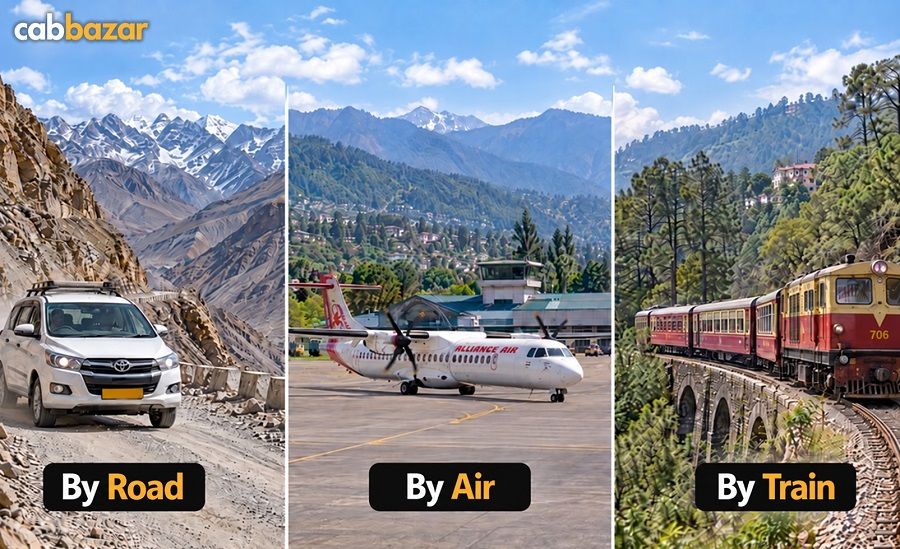
There is no airport or railway station in Spiti Valley. The last part of the journey is by road, and that is where the real mountain drive begins.
By Road
There are two commonly used road approaches:
1. Via Shimla and Kinnaur
This route passes through places such as Narkanda, Kalpa, Nako and Tabo before reaching Kaza. It is a longer journey, but it allows travellers to gain altitude more gradually. This is often a sensible choice for first-time visitors who want to reduce the risk of altitude-related problems.
2. Via Manali
The Manali route passes through the Atal Tunnel and towards Gramphu, Batal, and en route to Kunzum Pass, then Kaza.
This is still a shorter route but with roads at high altitude and seasonal accessibility. Access through Kunzum Pass may be closed in winter and open only after snow clearance.
Never choose your route based solely on the number of kilometres; the road and altitude are much more important.
By Air
The nearest airports commonly used for reaching the region include Bhuntar Airport near Kullu and Shimla Airport. Flight schedules and availability can be limited.
You'll still need to continue by road for a substantial part of the journey.
By Train
There is no direct railway connection to Spiti. You can travel by train to a nearby major railhead and continue by road towards Shimla or Manali.
For most travellers, the road journey is the main part of the trip.
Important Things to Know Before Visiting Spiti Valley
Spiti is beautiful, but it is also a challenging mountain destination. A little preparation can make your trip safer and more comfortable.
Give your body time to adjust. Kaza and several nearby villages are located at high altitude. Don't rush into sightseeing immediately after arriving. Take time to rest and follow proper acclimatisation guidance.
Carry warm clothes. Even in summer, mornings and nights can be cold. Pack layers, a warm jacket, gloves and comfortable shoes.
Keep medicines and basic supplies. Medical facilities are limited in remote areas. Carry your regular medicines and a basic first-aid kit.
Don't depend completely on mobile networks. Connectivity can be patchy. Download offline maps and keep important booking details saved on your phone.
Carry some cash. Digital payments may not work everywhere, especially in smaller villages.
Keep your vehicle prepared. Mountain roads can be rough and remote. Check tyres, brakes, fuel and basic vehicle equipment before starting.
Respect local culture. Many monasteries are active religious places. Ask before taking photographs inside and follow the instructions given by monks or local staff.
Avoid littering. Spiti's landscape is fragile. Carry your waste with you and leave the villages and campsites clean.
If you experience symptoms such as a severe headache, breathlessness at rest, confusion or repeated vomiting at high altitude, seek medical help immediately. Do not continue climbing or treat these symptoms as normal travel tiredness.
Frequently Asked Questions About Spiti Valley
1. Which are the best places to visit in Spiti Valley?
Some of the most popular places include Kaza, Key Monastery, Kibber, Chicham Bridge, Langza, Hikkim, Komic, Dhankar, Pin Valley and Chandratal Lake.
2. How many days are enough for a Spiti Valley trip?
Around 7 to 9 days is a reasonable starting point for exploring the main attractions. If you're travelling from Delhi, you may need additional days for the journey.
3. What is the best month to visit Spiti Valley?
June to September is generally a practical period for first-time travellers. September is also popular for its cooler weather and clear mountain views. Always check road conditions before travelling.
4. Is Spiti Valley suitable for a family trip?
It can be, but the high altitude, long road journeys and limited medical facilities need consideration. Families travelling with children or older members should plan a slower itinerary and seek medical advice where appropriate.
5. Is Spiti Valley safe for a road trip?
Many travellers visit Spiti by road, but the terrain can be challenging. Roads may be narrow, uneven or affected by snow, rain and landslides. Use a suitable vehicle and check local road updates.
6. Can I visit Spiti Valley in winter?
Yes, but winter travel is challenging. Temperatures can drop very low, roads may close and many services become limited. It is better suited to experienced travellers with proper preparation and local support.
7. Is Chandratal Lake open throughout the year?
No. Access is seasonal and depends on snow clearance, road conditions and local permissions. Check the latest information before planning your visit.
8. Is Spiti Valley different from Lahaul Valley?
Yes. They are neighbouring Himalayan regions but have different landscapes and settlements. Spiti is known for its cold desert terrain and Buddhist monasteries, while Lahaul has its own distinct valleys and mountain scenery.
9. Do I need a special permit to visit Spiti Valley?
Permit requirements depend on nationality, route and the areas you plan to visit. Indian citizens and foreign visitors may have different requirements for certain border areas. Check the latest official rules before travelling.
10. Is there mobile network and internet in Spiti Valley?
Connectivity is available in some towns and villages, but it can be unreliable in remote areas. Network coverage varies by operator and location, so don't depend on continuous internet access.
Plan Your Spiti Valley Road Trip
Taking a trip to Spiti should be done without haste. Rather than rushing, take your time: explore the villages, make impromptu stops at viewpoints and don't plan too tightly. There's no way to know beforehand that you might treasure that rather tranquil roadside break as much as the renowned monastery.
Depending on the season and road conditions, you can plan your entry through Shimla or Manali. Book rooms in advance in the remote villages and take a vehicle that can handle mountain roads.
Check Cab Bazar's outstation cab options for your trip and compare trip options before you leave. For a far-away destination like Spiti, check with the provider that the vehicle and driver are fit for the journey, as well as the trip duration and trip fare.