
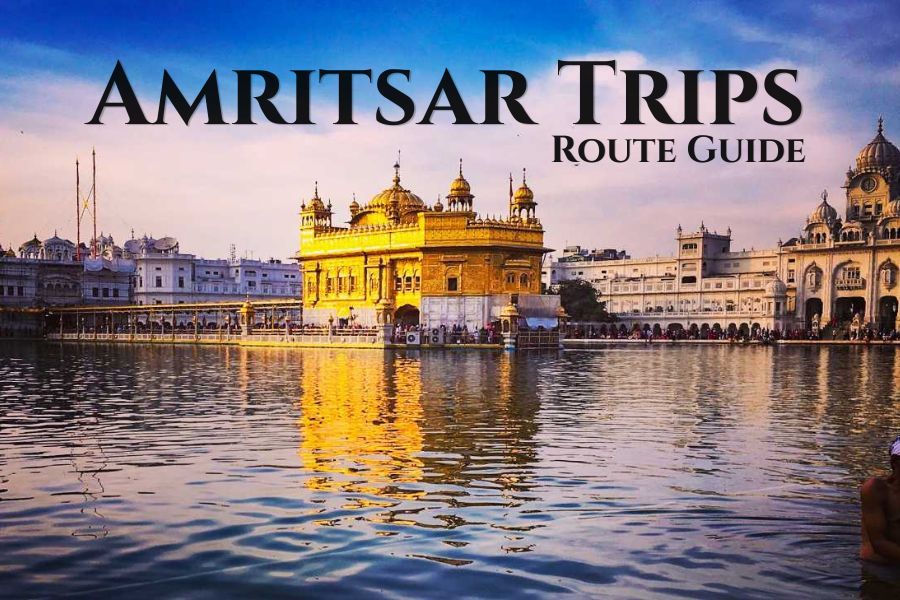
Amritsar is best known as the home of the Golden Temple, but the city has a great deal more to offer than its most famous landmark. Its bustling bazaars, layers of Sikh history, and famously generous Punjabi hospitality make it one of the most characterful starting points for a road trip in northern India. Choose your perfect road trips from Amritsar today.
The highways and state roads fanning out from Amritsar connect the city to everything from quiet Sikh pilgrimage towns and wetland bird sanctuaries to snow-covered Himalayan valleys and heritage hill stations. Along with planning longer drives, you can also enjoy local sightseeing in Amritsar to explore its rich culture and iconic attractions.
Drives range from 40 kilometers for a quick half-day outing to around 550 kilometers for an extended mountain escape. Whether you are planning a spontaneous day trip, a relaxed Amritsar weekend road trip, or a longer journey into the hills, there is a route from Amritsar that fits. This guide covers the best road trips from Amritsar across every distance and duration, with practical details on routes, travel times, what to see, and when to go.
Quick One-Day Road Trips from Amritsar (Under 150 km)
Some of the most rewarding one day road trip from Amritsar do not require an overnight stay. Within 150 kilometers of the city, you will find Sikh pilgrimage sites of national importance, a wetland that draws birds from across Central Asia, and one of the most watched daily ceremonies on the India-Pakistan border. A local cab service in Amritsar city is a comfortable option if you prefer not to self-drive, particularly for routes that involve multiple stops.
Tarn Taran Sahib
Distance: approximately 30 km. Drive time: around 45 minutes.
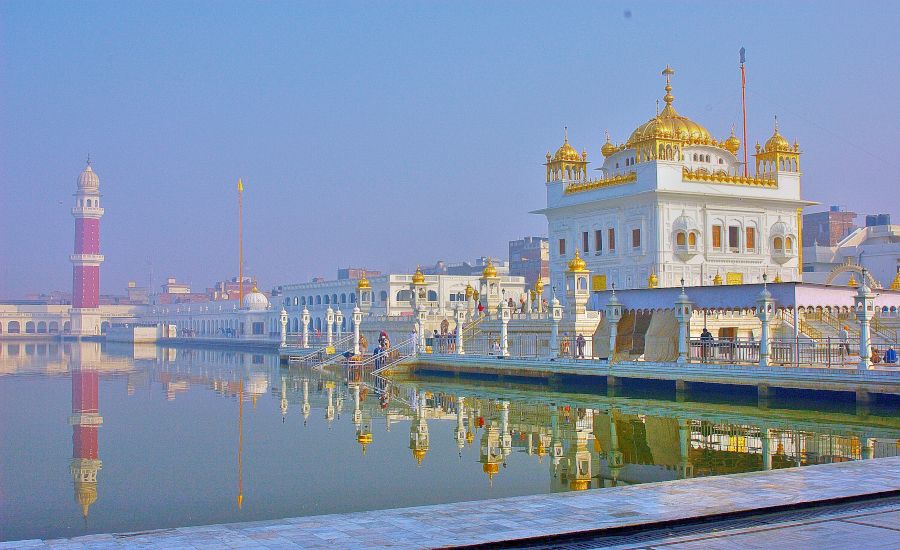
Tarn Taran Sahib is the closest significant Sikh pilgrimage town to Amritsar and makes for an easy and rewarding morning excursion. The main Gurudwara Sahib is one of the largest in Punjab, with a sarovar (sacred pool) that is said to be the largest of any Sikh shrine. The interior features intricate stucco work, ornate ceiling designs, and mirror inlay that reflects the same devotion to craft found at the Golden Temple. The town is most vibrant on Sundays when large numbers of pilgrims arrive. October to March is the most comfortable time to visit.
Wagah Border
Distance: approximately 32 km. Drive time: around 40 minutes.
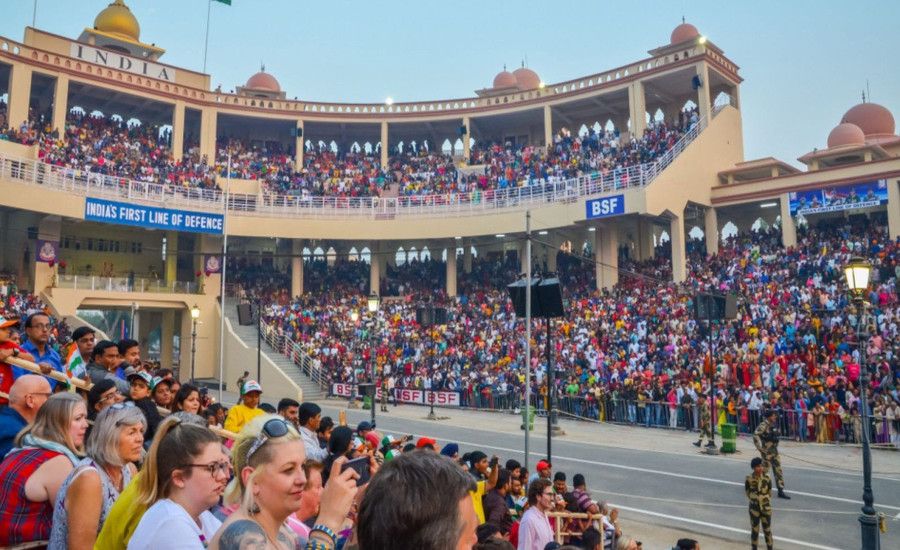
The Wagah Border post, which marks the boundary between India and Pakistan, hosts one of the most theatrical ceremonial events in the subcontinent. The Beating Retreat ceremony, conducted jointly by the Indian Border Security Force and Pakistan Rangers every evening since 1959, draws thousands of spectators to the grandstands on both sides of the gate, making it a popular day trip from Amritsar. The combination of military precision, nationalist fervor, and the sheer spectacle of the lowering of the flags makes it an unforgettable hour. Arrive at least an hour before the ceremony, particularly on weekends when crowds are large. November to February offers the most comfortable weather for the open-air seating.
Pul Kanjari
Distance: approximately 37 km. Drive time: around 1 hour.
Located close to the Wagah border, Pul Kanjari is a small historical site associated with Maharaja Ranjit Singh, who is said to have built a rest stop and baoli (step-well) here for a woman named Kanjari whom he admired. The remains of the baoli, a small temple, and a gurudwara sit in a quiet enclosure that sees relatively few visitors. It pairs well with a Wagah Border trip as an offbeat addition to the same day. Winter months from October to March are ideal for the drive.
Goindwal Sahib
Distance: approximately 50 km. Drive time: around 1 to 1.5 hours.
Goindwal Sahib holds a significant place in Sikh history as the town where Guru Amar Das, the third Sikh Guru, established a community and built the Baoli Sahib, an 84-step sacred well. Pilgrims believe that reciting the Japji Sahib at each step while descending and ascending brings spiritual merit. The gurudwara complex sits by the Beas River and the riverside setting adds to the overall sense of calm. The cool months from October to March are the best time to visit.
Khadur Sahib
Distance: approximately 45 km. Drive time: around 1 hour.
Khadur Sahib is the village where Guru Angad Dev, the second Sikh Guru, spent much of his life and where he passed away in 1552. The Gurudwara Tapiana Sahib and Gurudwara Mal Akhara Sahib are both located here and draw a steady stream of devotees, making it a meaningful short drive from Amritsar. The town sits on the bank of the Beas River and has a peaceful, unhurried atmosphere that is quite different from the busier pilgrimage sites closer to Amritsar. October to March is the most pleasant time for the drive and the walk around the complex.
Harike Wetland and Bird Sanctuary
Distance: approximately 64 km. Drive time: around 1 to 1.5 hours.
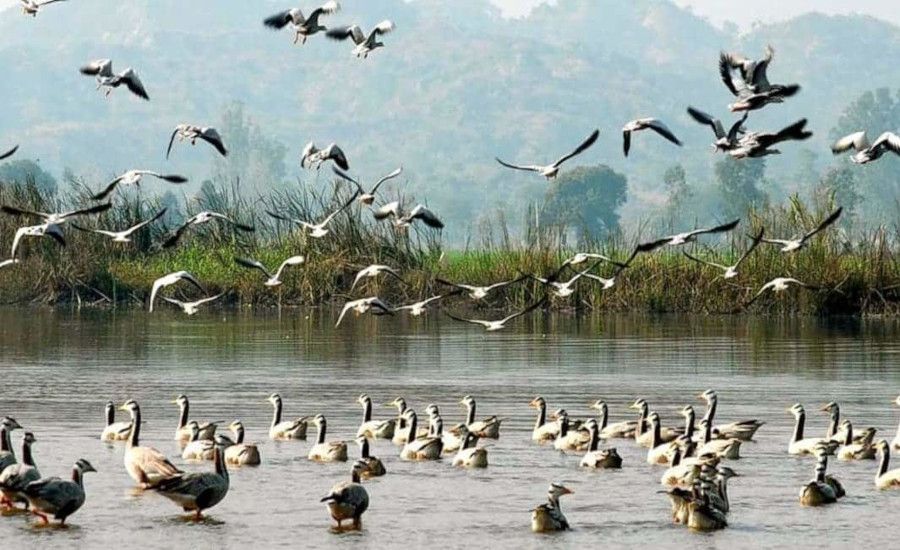
Harike is one of the largest freshwater wetlands in northern India, formed where the Beas and Sutlej rivers meet. It was designated a Ramsar Wetland of International Importance in 1990 and supports an extraordinary range of birdlife, including the endangered Siberian crane, various species of ducks and geese, and large flocks of migratory waders that arrive between October and March. The sanctuary is also home to river dolphins, gharial, and the Indian softshell turtle. For birdwatchers and nature photographers, this is one of the most underrated day trips from Amritsar. The peak visiting season runs from November to February when migratory species are present in the greatest numbers.
Jalandhar
Distance: approximately 80 km. Drive time: around 1.5 to 2 hours via NH 44.
Jalandhar is widely considered the oldest continuously inhabited city in Punjab and sits comfortably at the intersection of history, commerce, and culture. The city is known for its manufacturing of sports goods and musical instruments, both of which you can browse in the specialist markets of the old bazaar area. The Devi Talab Mandir, a significant Hindu temple with a tank said to date back to the Mahabharata era, is worth a visit, as is the Nicholson Cemetery, a sobering reminder of the 1857 uprising. For food, Jalandhar has some of the best roadside Punjabi Dhabas between Amritsar and Delhi. The Amritsar to Jalandhar cab fare makes this one of the most practical day trips on this list. October to March is the best season.
Sultanpur Lodhi
Distance: approximately 76 km. Drive time: around 1.5 hours.
Sultanpur Lodhi is one of the most historically important towns in the Sikh tradition. Guru Nanak Dev, the founder of Sikhism, spent roughly fourteen years here as a young man, working as a storehouse manager before undergoing the spiritual experience that led to his life as a teacher. The town contains several gurudwaras commemorating key moments from this period, including Gurdwara Ber Sahib, where a ber (jujube) tree under which Guru Nanak meditated is believed to still be growing. The town received considerable investment around the 550th anniversary celebrations of Guru Nanak's birth in 2019, and its heritage infrastructure is now well maintained. October to March is the most comfortable time to visit.
Further there are other popular sites in Amritsar that you should visit during your trip. Read our blog - Places to Explore in Amritsar.
Weekend Escape Road Trips from Amritsar (150 to 300 km)
For a one or two night getaway, the roads leading north and east from Amritsar open up into some of the most rewarding terrain in northern India. Within three to five hours of the city, you can reach the foothills of the Himalayas, Tibetan cultural enclaves, Sikh heritage towns of national importance, and well-connected hill stations with good accommodation options. These Amritsar weekend road trips work well whether you are travelling as a family, as a couple, or with a group of friends. For added convenience, you can also opt for a one way cab in Amritsar, making your journey flexible and hassle-free while exploring these popular weekend road trips from Amritsar.
Anandpur Sahib
Distance: approximately 176 km. Drive time: around 3.5 to 4 hours.
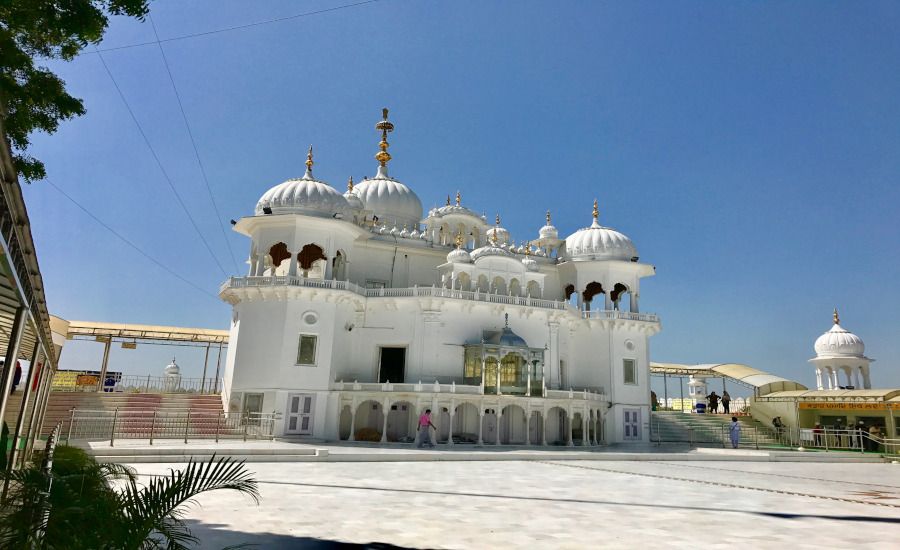
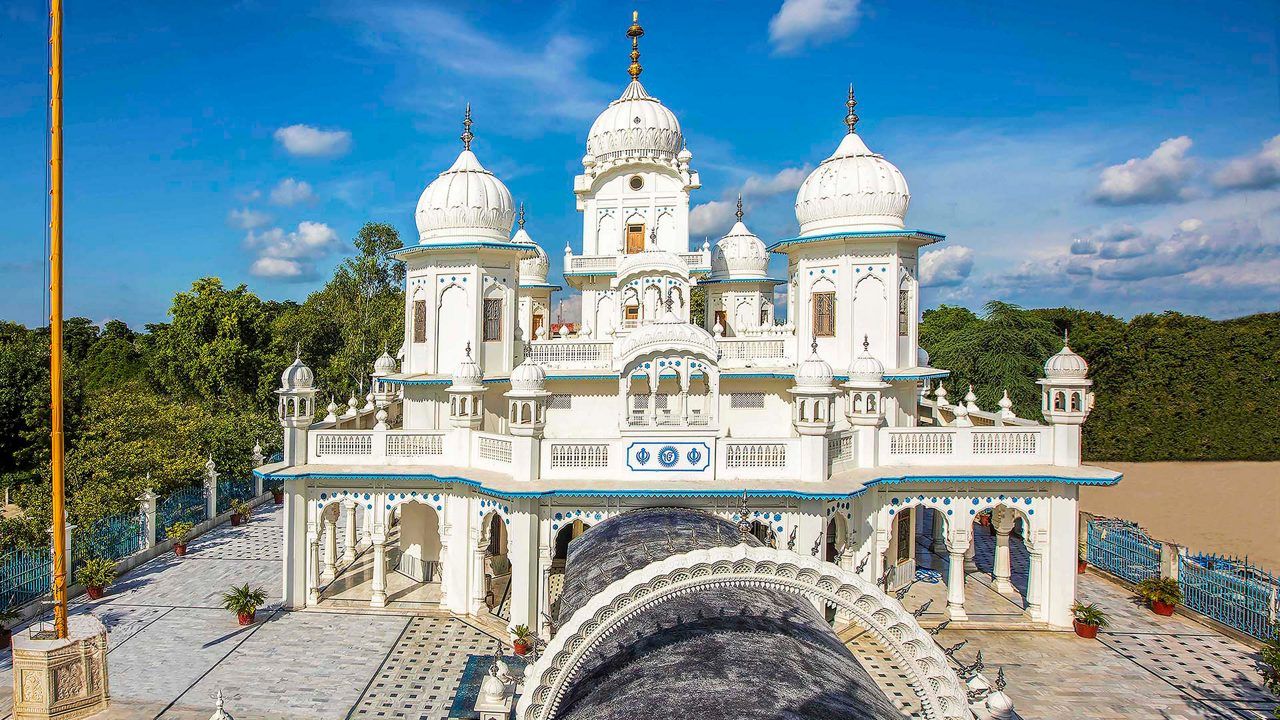
Anandpur Sahib is one of the holiest cities in Sikhism, founded by Guru Tegh Bahadur in 1665 and the site where Guru Gobind Singh established the Khalsa in 1699. The city contains five takhts, the highest seats of Sikh religious authority, of which Takht Sri Kesgarh Sahib is the most important. The Virasat-e-Khalsa museum, designed by the Israeli-Canadian architect Moshe Safdie and opened in 2011, is one of the finest heritage museums in India and alone justifies the journey. The Hola Mohalla festival, held at Anandpur Sahib in the month following Holi, is an extraordinary gathering of Nihang warriors, martial artists, and devotees that draws visitors from around the world. October to March is the most comfortable time to visit for standard sightseeing.
Pathankot
Distance: approximately 115 km. Drive time: around 2 to 2.5 hours.
Pathankot sits at the junction of Punjab, Himachal Pradesh, and Jammu and Kashmir, which gives it a character quite distinct from other Punjab towns. It serves primarily as a gateway to Dalhousie, Dharamshala, Chamba, and the Ravi Valley, but has its own points of interest worth including on a longer itinerary. The Shahpurkandi Fort, perched above the Ravi River, the Ranjit Sagar Dam lake, and the ancient Mukteshwar Temple are all within easy reach. For anyone planning a road trip deeper into the hills, Pathankot makes a natural lunch stop or first-night stay. October to March is generally the most pleasant season for the base town, though the destinations beyond it have their own seasonal considerations.
Chandigarh
Distance: approximately 228 km. Drive time: around 4 to 4.5 hours via NH 44.
Chandigarh occupies a unique position in Indian urban history as the country's first planned city, designed by Le Corbusier in the 1950s. The results are immediately apparent in the logical grid of broad, tree-lined sectors, the modernist Capitol Complex Chandigarh (now a UNESCO World Heritage Site), and a general sense of organized calm that distinguishes it from most Indian cities of comparable size. Chandigarh is also an excellent food destination and serves as a great base for road trips toward nearby hill stations like Shimla and Kasauli. If you’re planning a comfortable journey between cities, opting for an Amritsar to Chandigarh taxi is a convenient way to travel and enjoy the scenic route. The best time to visit is from October to March, when the weather is pleasant and ideal for exploration.
Dalhousie
Distance: approximately 198 km. Drive time: around 4 to 4.5 hours.
The Amritsar to Dalhousie road trip is a scenic journey in the hill of Himachal. As it was established as a hill station by the British in 1854, laid out across five hills in the Chamba district of Himachal Pradesh at altitudes ranging from about 1,525 to 2,378 meters. The combination of colonial-era architecture, pine and rhododendron forests, and views across the Dhauladhar ranges gives it a charm that many of the more commercialised hill stations have lost. Nearby Khajjiar, a high-altitude meadow encircled by deodar forest and often compared to Swiss alpine scenery, is just 24 kilometers away and well worth the detour. Kalatop Wildlife Sanctuary, Dainkund Peak, and Satdhara Falls are among the other nearby attractions. March to June and September to November are the most pleasant seasons; July and August bring heavy monsoon rainfall.
Dharamshala and McLeodganj
Distance: approximately 208 km. Drive time: around 4 to 4.5 hours.
Dharamshala is divided into two distinct parts. Lower Dharamshala is a busy administrative town; upper Dharamshala, known as McLeodganj, is where the Tibetan government-in-exile is based and where His Holiness the Dalai Lama has his residence. The result is a town with a cultural texture found nowhere else in India, where Tibetan monasteries, prayer flag-strung lanes, Momos and Thukpa, and bookshops stocking Buddhist philosophy sit alongside traditional Himachali culture and a well-developed backpacker scene. The Tsuglagkhang Complex (the main temple and museum), Namgyal Monastery, and the trek to Triund are the main draws. March to June and September to November are the best seasons for the road trip and the mountain walks.
Jammu
Distance: approximately 201 km. Drive time: around 4 to 4.5 hours via NH 44.
Jammu is the winter capital of the Jammu and Kashmir union territory and the main gateway city for the Vaishno Devi pilgrimage. The Vaishno Devi Temple, set in the Trikuta Hills about 30 kilometres from Jammu, is one of the most visited Hindu shrines in India, drawing millions of pilgrims annually and making it a popular choice for an Amritsar weekend drive. The city also contains the impressive Raghunath Temple complex, the Dogra Art Museum with its fine collection of Pahari miniature paintings, Bahu Fort overlooking the Tawi River, and the ornate Mubarak Mandi Palace. October to March is the best time for sightseeing and pilgrimage. April to June is also manageable; the monsoon months of July to September bring heavy rainfall and an increased risk of landslides on the roads leading further into the hills.
Getaways to Hill Stations from Amritsar (300 to 600 km)
The longer drives north and northeast from Amritsar take you into some of the most spectacular mountain landscapes in India. These are road trips that require proper planning, an early start, and ideally an overnight stay at the destination. The routes pass through fertile Punjab plains, the foothills of the Shivaliks, river valleys carved by the Beas, Ravi, and Chenab, and eventually into the high Himalayas. For most of these routes, a well-maintained vehicle and an awareness of seasonal road conditions are important. Here are the best hill station road trips from Amritsar.
Manali
Distance: approximately 382 km. Drive time: around 8 to 9 hours via NH 3.
Manali sits at the top of the Kullu Valley at an altitude of around 2,050 metres and has been one of India's most popular hill destinations for decades. The old Manali village, the Hadimba Devi Temple set in a deodar grove, the Solang Valley for skiing and paragliding, the Rohtang Pass for snow access, and the Beas River for rafting and fishing are the main draws. The Amritsar to Manali drive via NH 3 passes through Pathankot, Palampur, and Kullu, all of which are worth brief stops. The Amritsar to Manali taxi fare varies by vehicle type but the journey is well served by operators of all sizes. May to June and September to October are the most comfortable seasons for the drive; December to February offer snow but require checking road conditions before departure.
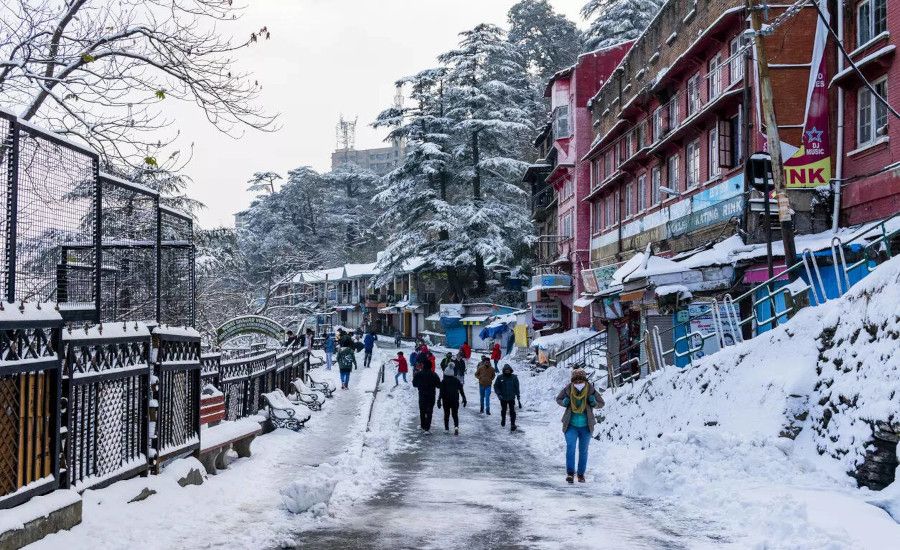
Shimla
Distance: approximately 294 km. Drive time: around 6 to 6.5 hours via NH 205.
Shimla served as the summer capital of British India for nearly a century and retains a great deal of its colonial character. The Mall Road, the Ridge, Christ Church, the Viceregal Lodge (now the Indian Institute of Advanced Study), and the narrow-gauge Kalka-Shimla Railway, another UNESCO World Heritage Site, are all within the town or its immediate outskirts. For families, the combination of easy walking distances, good hotels, and a well-organised tourist infrastructure makes Shimla one of the most practical hill station choices in northern India. The Amritsar to Shimla road trip via NH 205 avoids the more congested NH 3 and offers consistently good road conditions. October to February is best for snow and winter atmosphere; March to June suits those who want pleasant weather for walking and sightseeing. Avoid July to September if possible, as monsoon rains can make the roads slow and occasionally hazardous.
Kullu
Distance: approximately 368 km. Drive time: around 7 to 8 hours via NH 3.
Kullu, known traditionally as the Valley of Gods for the large number of local deities worshipped here, sits in the broad valley formed by the Beas River before it narrows into the Kullu gorge. The town itself is best known as the venue for the Kullu Dussehra festival in October, when deities from over 300 temples across the valley are carried in palanquins to a central ground for a week of ceremonies that is genuinely extraordinary. Outside of festival time, Kullu is a pleasant and quieter alternative to Manali with its own share of temples, river beaches, and trekking options. March to June is the most comfortable season for sightseeing; December to February offers snow and is popular with those who enjoy cold-weather activities.
Khajjiar
Distance: approximately 210 km. Drive time: around 5 to 5.5 hours via NH 54.
Khajjiar is a small plateau at around 1,920 metres in the Chamba district that has earned its reputation as the mini-Switzerland of India, a comparison that the Swiss ambassador made official by planting a signpost in 1992. A circular meadow ringed by thick deodar and pine forest, with a small glacial lake at its centre and the Khajji Nag Temple on its edge, gives the place a neatness and visual coherence that is genuinely distinctive. It is usually visited as a day trip from Dalhousie, 24 kilometres away, but it also makes a worthwhile destination in its own right as an overnight stop. All seasons have their appeal: winter for snow, spring for wildflowers, summer for cool weather, and autumn for clear skies and vivid colour.
Kasauli
Distance: approximately 279 km. Drive time: around 5 to 5.5 hours via NH 344A.
Kasauli is one of the quietest and most charming of the smaller Himachal hill stations, sitting at around 1,900 metres in the Solan district. Unlike Shimla or Manali, it has not been heavily developed for mass tourism, and the result is a town that retains an almost entirely colonial-era character, with Victorian bungalows, a small cantonment area, and an unhurried atmosphere. The Monkey Point viewpoint, the Christ Church, and the short walking trails through the surrounding forest are the main activities. It suits travellers who want a restful long weekend in the hills without the crowds. Summer and autumn are the most pleasant seasons; winter brings cold nights but manageable daytime temperatures.
Narkanda
Distance: approximately 383 km. Drive time: around 9 to 10 hours via NH 205.
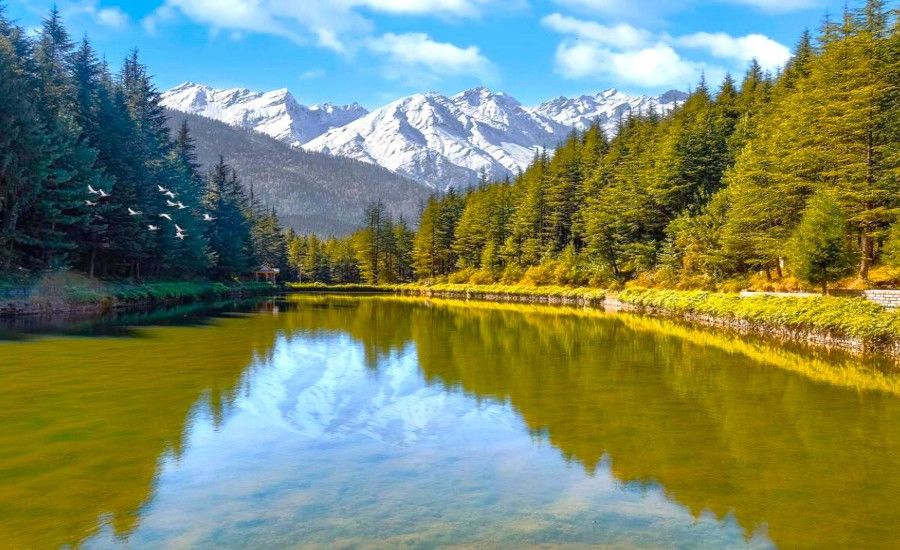
Narkanda sits at 2,708 metres on the old Hindustan-Tibet Road, roughly 65 kilometres east of Shimla, and is one of the lesser-known but genuinely rewarding hill destinations accessible from Amritsar. The town is surrounded by apple and cherry orchards that are spectacular during the blossom season in April and at harvest time in September. The Hatu Peak, at 3,400 metres and reachable by a forest road from town, offers panoramic views of the Kinnaur and Spiti ranges on clear days. Winter, from December to February, brings regular snowfall and the Narkanda ski slopes attract beginners and those looking for a quieter alternative to Manali. The monsoon from July to September is best avoided due to road conditions.
Mussoorie
Distance: approximately 470 km. Drive time: around 9 to 10 hours via NH 44.
Mussoorie, in the Garhwal Himalayas of Uttarakhand, is one of the most popular hill stations in India and sits at around 2,000 metres above Dehradun. The town stretches along a ridge offering views of the Doon Valley on one side and, on clear days, the peaks of Gangotri, Kedarnath, and Badrinath on the other. Gun Hill, Kempty Falls, Lal Tibba, and the Camel's Back Road walk are among the standard attractions. The drive from Amritsar via NH 44 passes through Jalandhar, Ludhiana, Ambala, and Dehradun, making it possible to break the journey usefully. October to June is the most practical window for the drive; the monsoon months of July to September are manageable but expect some disruption from landslides on the roads above Dehradun.
Chail
Distance: approximately 370 km. Drive time: around 7 to 8 hours via NH 44.
Chail was built as a private retreat by Maharaja Bhupinder Singh of Patiala in the early 20th century after he was banned from Shimla by Lord Kitchener. The result is an unusually quiet hill destination at around 2,250 metres in the Shivalik ranges, making it perfect choice for hill station road trip from Amritsar, and it is notable for possessing the highest cricket ground in the world, a wildlife sanctuary with deer, langurs, and various bird species, and a small palace that has been converted into a heritage hotel. It is an ideal destination for travellers who want a peaceful Himalayan retreat without the commercial activity that surrounds Shimla and Manali. December to February offers snow; spring and autumn are the most pleasant seasons overall.
Auli
Distance: approximately 520 km. Drive time: around 10 to 11 hours via NH 58 through Rishikesh.
Auli is the premier ski resort in India, located at around 2,500 metres in the Chamoli district of Uttarakhand with views of Nanda Devi, the second highest peak in India. The ski season runs from January to March, and the slopes, served by Asia's longest gondola ropeway at 4 kilometres, attract both beginners and experienced skiers. Outside of winter, Auli is a good base for treks into the Kuari Pass area and toward the Valley of Flowers National Park and Hemkund Sahib. The drive from Amritsar passes through Haridwar and Rishikesh, both of which justify a stop. Summer and autumn are ideal for trekking and sightseeing; December to February is essential for anyone coming specifically for skiing.
Offbeat and Heritage Road Trips from Amritsar
Not every road trip from Amritsar needs to involve a mountain pass or a well-known hill station. Punjab and the broader region around Amritsar contain a number of towns and destinations that reward travellers with an interest in history, architecture, handicrafts, and the quieter side of rural and small-town India. These options are ideal for an offbeat road trip from Amritsar, which tend to involve less traffic, lower costs, and the kind of experiences that you will not find in a standard tourism brochure.
Kapurthala
Distance: approximately 68 km. Drive time: around 1.5 hours via the Grand Trunk Road.
Kapurthala is one of the most architecturally distinctive towns in Punjab, largely due to the passion of Maharaja Jagatjit Singh for French architecture. The Jagatjit Palace, now a boarding school, was modelled on the Palace of Versailles; the Moorish Mosque in the old town draws on Moroccan and Spanish Islamic architecture; and the Elysee Palace (Mata Palace) adds another layer of European influence to this unlikely Punjabi setting. The Shalimar Gardens and the Kanjli Wetland, a Ramsar site a few kilometres outside town, make Kapurthala a destination with more depth than its size might suggest. It is a perfect short heritage road trip from Amritsar, moreover October to March is the best time for walking tours and photography.
Hoshiarpur
Distance: approximately 69 km. Drive time: around 1.5 hours via the Grand Trunk Road.
Hoshiarpur sits in the foothills of the Shivaliks and has a character that is somewhat distinct from the plains towns of Punjab. It is known for its woodcraft and furniture industry, and the local bazaars are a good place to browse traditional Punjabi inlay work. The Takhni-Rehmapur Wildlife Sanctuary, about 30 kilometres from the town, is a small but pleasant reserve with deer, birds, and a reservoir. Dera Beas, the headquarters of the Radha Soami Satsang Beas spiritual community, is located a few kilometres south of Hoshiarpur and attracts a large number of visitors. October to March is the most comfortable season.
Patiala
Distance: approximately 234 km. Drive time: around 4 to 4.5 hours via NH 44.
Patiala was the capital of one of the most prosperous of the princely states of British India, and its legacy is visible in a number of substantial buildings that survive in reasonable condition. The Qila Mubarak complex, the original 18th-century fort and palace at the centre of the old city, is the most important. The Sheesh Mahal (Palace of Mirrors) and its attached museum, the Bahadurgarh Fort, and the Moti Bagh Palace are among the other heritage sites. Patiala is also well known for its distinctive salwar, its traditional turban style, and its sweets, particularly patashas and pinni. October to March is ideal for a heritage walking tour of the old city.
Kangra
Distance: approximately 198 km. Drive time: around 4 to 4.5 hours via NH 154.
Kangra sits in the broad valley between the Dhauladhar and the Shivalik ranges and was one of the most important political centres in the western Himalayas for much of recorded history. The Kangra Fort, perched above the Banganga River and claimed to be one of the oldest forts in India, held out against repeated sieges over the centuries. The Brajeshwari Devi Temple below the fort is one of the 51 Shakti Peethas. Kangra is also the origin of the distinctive Kangra school of miniature painting, examples of which can be seen at the Maharaja Sansar Chand Museum in nearby Nadaun. The Kangra Valley Railway, a narrow-gauge line running east from Pathankot through the valley, adds an additional dimension to any visit. March to June and September to November are the best seasons.
Pragpur
Distance: approximately 167 km. Drive time: around 3.5 hours via NH 3.
Pragpur, in the Kangra district of Himachal Pradesh, holds the distinction of being the first heritage village in India to be declared as such by the state government. The village preserves a remarkably intact ensemble of traditional architecture: cobblestone lanes, mud-plastered walls with lime finishes, flat-roofed houses with carved wooden details, and a step-well at the centre of the settlement. The Judge's Court, a heritage hotel in a 19th-century colonial building on the edge of the village, is one of the best small hotels in Himachal Pradesh. Pragpur is a quiet, unhurried place that works well as a one or two night stop on a longer drive toward Dharamshala or Kangra. October to June is the most pleasant time to visit.
Bathinda
Distance: approximately 167 km. Drive time: around 3 to 3.5 hours via NH 54.
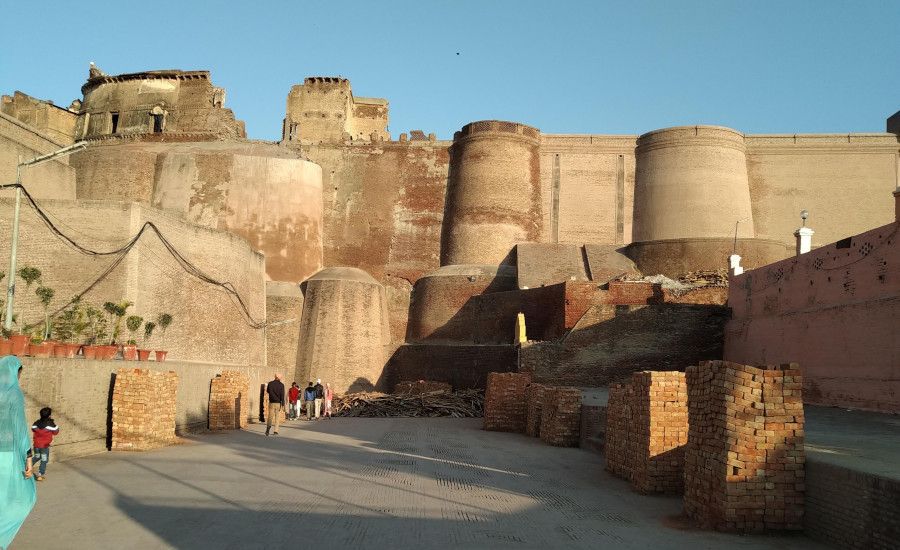
Bathinda is one of the oldest cities in Punjab, with a history that stretches back over 1,500 years. The Qila Mubarak fort at the centre of the old city is one of the oldest surviving forts in northern India and was where Razia Sultan, the first woman ruler of the Delhi Sultanate, was imprisoned in 1240. The city is also home to the Akal Garh Fort, the Damdama Sahib Gurudwara (one of the five takhts of Sikhism) about 28 kilometres away, and the Rose Garden, one of the largest in the state. The Amritsar to Bathinda drive crosses the flat southwestern Punjab plains and offers a perspective on the agricultural heartland of the state that is different from the more touristy routes heading north. October to March is the best time for a visit.
Una
Distance: approximately 153 km. Drive time: around 3 hours via NH 3.
Una is the administrative headquarters of Una district in Himachal Pradesh and serves as the main transit point for visitors to the Chintpurni Temple, one of the 51 Shakti Peethas and one of the most visited pilgrimage sites in the region. The Chintpurni Mata Mandir, about 30 kilometers from Una town, attracts pilgrims throughout the year and is especially crowded during the Navratri festivals in spring and autumn. The Bangana Dam and the forested hills of the lower Shivaliks around Una add a natural dimension to what is primarily a spiritual destination. March to June and September to November are the most comfortable seasons for the drive and the pilgrimage.
Road Trip Planning Tips for Amritsar
A well-planned road trip is a significantly better road trip. The routes from Amritsar vary considerably in terms of road quality, altitude, seasonal conditions, and the availability of fuel and services. These practical Amritsar road trip tips will help you get the most out of any drive you plan from the city.
Timing Your Departure
Starting early makes a substantial difference on almost any route from Amritsar. City traffic is manageable before 7am, and an early departure on routes toward Manali, Shimla, or Mussoorie means you will reach the hills while the light is still good for the mountain sections. Weekday departures are generally less congested than Saturday mornings, when the highways toward Chandigarh and the hill stations fill quickly.
Vehicle Preparation
Before any drive over 200 kilometres, check tyre pressure and condition, brake fluid, engine oil, coolant, and all lights. If you want to properly prepare for the Amritsar road trip routes into the hills, pay particular attention to brakes and ensure your spare tyre is in usable condition. Hill routes in Himachal Pradesh and Uttarakhand can be hard on vehicles, and breakdown assistance is limited on the more remote sections.
Route Planning and Maps
Mobile coverage is good on all major highways from Amritsar and on the main routes to Chandigarh, Shimla, and Manali. Coverage becomes patchy on smaller roads in the Himachal and Uttarakhand hills. Download offline maps for the relevant areas before you leave. Google Maps and Maps.me both work well for the routes covered in this guide.
Fuel and Tolls
All major highways from Amritsar are served by regular fuel stations. NH 44 toward Chandigarh and NH 3 toward Manali both have reliable petrol and diesel availability. The Manali route has fewer stations in the final 80 kilometres before the town; fill up at Kullu before continuing. Toll plazas are present on all national highways, and FASTag is now mandatory for most vehicles. Load your FASTag wallet before departure to avoid delays at busy toll queues.
Food and Rest Stops
One of the genuine pleasures of driving through Punjab is the quality of the roadside dhabas. The stretch of NH 44 between Amritsar and Jalandhar has several excellent dhabas that are popular with truck drivers, which is generally the best indicator of quality. For the hill routes, the bazaars of Pathankot, Mandi, and Kullu offer good options for a sit-down meal. Carry water, dry snacks, and a basic first aid kit for longer journeys.
Safety
Avoid driving at night on mountain roads, particularly the Amritsar to Manali route above Kullu and the Mussoorie approach from Dehradun. As part of essential road safety tips India travellers should follow, remember the lighting is limited, road surfaces deteriorate on smaller routes after dark, and visibility is reduced by fog in winter months. On plains highways like NH 44, night driving is generally safe but requires vigilance around trucks, which tend to drive faster overnight. Carry an emergency contact list and your vehicle documents, including insurance and registration, at all times.
For more you can also check our :- 10 Tips for Budget - Friendly Travel in India.
Best Time of Year for Road Trips from Amritsar
October to March is the best overall window for road trips from Amritsar. The weather across Punjab is cool and clear, the plains destinations are at their most pleasant, and the lower hill routes to Dalhousie, Dharamshala, Kasauli, and Shimla are accessible and enjoyable. For high-altitude destinations like Manali, Auli, and Narkanda, check specific road conditions before travelling between December and February, as snow can close passes. Summer, from April to June, is manageable for hill stations and increasingly warm on the plains. The monsoon from July to September brings unpredictable roads in the hills and should be approached with caution.
Sample Road Trip Itineraries from Amritsar
If you wish for a ready made travel plan with no worries, the Amritsar itineraries are designed for you, be it a road trip. Easy, sorted and well put, these will make your trip hassle-free. Short one-day escape, or you wish for a break for a weekend just pack your bag and run.
One-Day Trip: Amritsar to Wagah Border and Back
This is the simplest and most satisfying one-day road trip from Amritsar, and one that works equally well for first-time visitors and those returning specifically for the ceremony.
Start the morning with a visit to the Golden Temple if you have not been recently, ideally before 8 am when the complex is quieter. Drive south on the Grand Trunk Road toward Wagah Border, approximately 30 kilometres. The drive takes under 45 minutes, and if you’re planning your travel, it’s helpful to check the Amritsar to Wagah Border taxi fare in advance for a smooth trip.
If time allows, make a brief stop at Pul Kanjari, 7 kilometres short of Wagah, to see the historical baoli and temple complex. Arrive at the Wagah viewing area at least 90 minutes before the Beating Retreat ceremony, which begins approximately 30 to 45 minutes before sunset and varies by season. The ceremony itself lasts around an hour.
After the ceremony, drive back toward Amritsar and stop at one of the highway dhabas on the Grand Trunk Road for dinner before returning to the city. The whole day requires no more than a few hundred kilometres and no booking beyond a hotel if you need one.
Weekend Hill Trip: Amritsar to Dalhousie and Khajjiar
This Amritsar weekend hill trip plan covers approximately 200 km each way and offers a comfortable introduction to Himachal Pradesh without the longer driving times required for Manali or Shimla.
Day one: Depart Amritsar early, targeting a 6 am start. Drive north via Pathankot, which is a logical stop for breakfast or fuel, and continue on NH 154 toward Dalhousie. The drive takes around four to four and a half hours. Spend the afternoon walking the Thandi Sarak (a colonial-era road with views of the Pir Panjal ranges), exploring Gandhi Chowk, and checking into your hotel. In the evening, have dinner at one of the restaurants along the main bazaar.
Day two: Drive the 24 kilometres to Khajjiar in the morning, allowing around an hour each way. The meadow is at its best in the morning light before the day-trippers arrive. Return to Dalhousie for a late lunch and depart for Amritsar by 2pm, reaching the city by 7 to 8 pm. This itinerary works in any season except the height of the monsoon.
Three-Day Weekend: Amritsar to Manali
The Amritsar to Manali road trip is the most ambitious of the standard weekend drives from the city and works best over three days to avoid exhausted driving on the mountain sections. While this is very different from the long distance Amritsar to Kumarakom itinerary, it offers a rewarding Himalayan experience.
Day one: Depart Amritsar by 5am and drive via Pathankot to Dharamshala or Mandi, covering approximately 200 to 220 kilometres. This allows a relaxed pace with stops and avoids arriving in Manali after dark on the first day.
Day two: Continue from Mandi or Dharamshala to Manali, around 150 to 180 kilometers, depending on your overnight stop. The road follows the Beas Valley for much of this section and is scenic throughout. Check in to your hotel in the afternoon and spend the evening exploring the Old Manali area or the Mall Road.
Day three: Spend the morning at the Hadimba Devi Temple, Solang Valley, or on a rafting session on the Beas at Kullu, then begin the return journey by early afternoon. Break the return drive at Pathankot or in the Punjab plains and reach Amritsar by late evening.
If you’re planning more such trips, you can also explore our guide on Best Holiday Destinations in India to Visit for more travel inspiration across the country.
Amritsar road trip FAQs
1.What is the best time to plan an Amritsar trip?
The best time to visit Amritsar is from October to March when the weather is pleasant and perfect for sightseeing. Summers can get quite hot, so winter months are more comfortable for exploring.
2. How can I plan a perfect Amritsar Golden Temple trip for the first time?
For your first visit, start early at Golden Temple to experience the peaceful morning vibe and attend the langar. You can then explore nearby attractions and enjoy the spiritual atmosphere at a relaxed pace.
3. What are the top attractions to include in an Amritsar tour?
Some must-visit places include Golden Temple, Jallianwala Bagh, and Wagah Border. These spots give you a mix of history, patriotism, and spirituality.
4. Is 1 day trip to Amritsar enough to explore the main sights?
Yes, a one-day trip can cover major highlights like the Golden Temple, Jallianwala Bagh, and Wagah Border. However, staying for an extra day allows you to explore more comfortably.
5. What is the ideal itinerary for an Amritsar one day trip?
Start your day with a visit to the Golden Temple, followed by Jallianwala Bagh and local markets. In the evening, head to Wagah Border to witness the retreat ceremony for a complete experience.
6. Are there any travel tips for first-time visitors to Amritsar?
While visiting the Golden Temple, dress modestly and cover your head as a mark of respect. Also, try to visit early morning or late evening to avoid crowds.
7. What local food should I try during my visit to Amritsar?
Don’t miss trying Amritsari Kulcha, Lassi, Chole Bhature, and street food around the city. The food here is rich, flavorful, and a big part of the overall experience.
8. Is Amritsar suitable for a family vacation or solo travel?
Yes, Amritsar is perfect for both family trips and solo travel. The city is safe, culturally rich, and offers a peaceful yet engaging travel experience.
Amritsar is a city that rewards time spent beyond its most famous attraction. The Golden Temple is rightly one of the great experiences of travelling in India, but the city's position at the heart of Punjab, within reach of the Himalayan foothills, a dozen Sikh pilgrimage towns, and some of the most scenic drives in northern India, makes it an ideal base for exploring a wider region. It is also the perfect starting point for the best road trip from Amritsar.
Whether you have an afternoon free for a drive to Wagah, a weekend to spare for Dalhousie or Anandpur Sahib, or a full week to head north through Kullu and up to Manali, the roads from Amritsar will take you somewhere worthwhile. If you want to plan a road trip from Amritsar, make sure to plan ahead for the longer drives, travel in the right season, and start early on the mountain routes.Bookmark this guide, explore the best road trip ideas Amritsar, choose your route and start your next Amritsar road trip.