
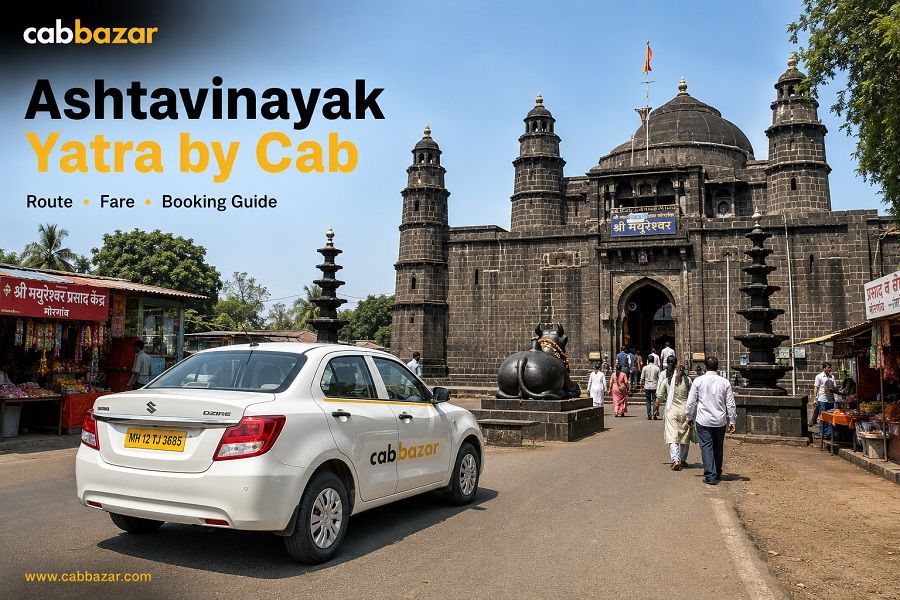
Planning the Ashtavinayak Yatra is way easier once your travel is all sorted. This pilgrimage covers eight sacred Ganpati temples all over Maharashtra. Most of these towns aren't exactly easy to get to directly by train or bus. Getting around between the temples on local transport? It's not great. Getting between places is hard and carrying bags over several bus stops for days is a pain, especially if you have a family, are older, or have kids.
That's why thousands of people now just book a dedicated taxi for the trip. It beats trying to piece together buses, shared jeeps, and local autos. A private cab means you've got a set route, a driver who actually knows the circuit, and a schedule that works around your visit times, not just anyone else's. Planning Your Ashtavinayak Yatra
Plan My YatraThis guide's gonna run through everything you need before you book that car. This will cover the temple route, how far apart towns are, daily trip ideas, transport, what costs the most, and easy booking tips. Booking fast is also possible via WhatsApp or the CabBazar app.
What Is the Ashtavinayak Yatra?
Ashtavinayak basically means "eight Ganesh idols." These are eight ancient, self-manifested shrines. They're in the Pune, Raigad, and Ahmednagar regions of Maharashtra. Each temple's got its own history, going back centuries, its own look with different architecture, and a local story about how the idol ended up worshipped there.
The idea is you're supposed to visit all eight shrines in a specific order for the pilgrimage. You start and end at the same place, typically Moreshwar in Morgaon. Most pilgrims and priests along the way think doing it in this order, instead of just hitting the temples randomly, is a big part of the ritual.
The whole trip covers about 700 to 750 kilometers. It really depends on where you're starting from, the exact roads you take, and if you begin from Pune, Mumbai, Nashik, or Ahmednagar.
The Eight Ashtavinayak Temples, in Traditional Order
1. Moreshwar (Morgaon)
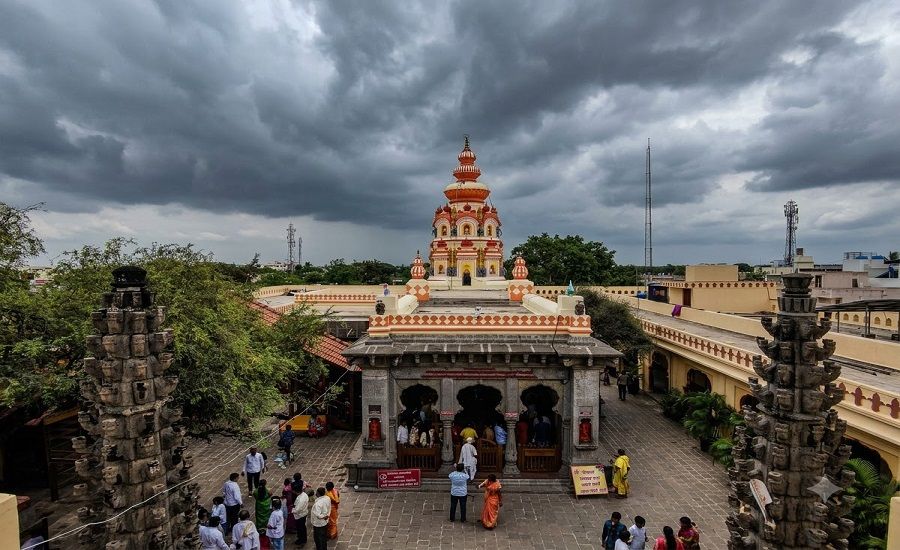
This is where the yatra is supposed to start. It's called "Adi Ashtavinayak" - the first of the eight. The story goes that Ganesha, as Mayureshwar, beat the demon Sindhurasura right here while riding a peacock, a mayura. That's why the idol has a peacock at its base, unlike the usual mouse. The temple has a fort-like look with four towers. It feels a bit Mughal for a Hindu site. It sits by the Karha river in the Pune district, about 65 km from Pune city.
2. Siddhivinayak (Siddhatek)
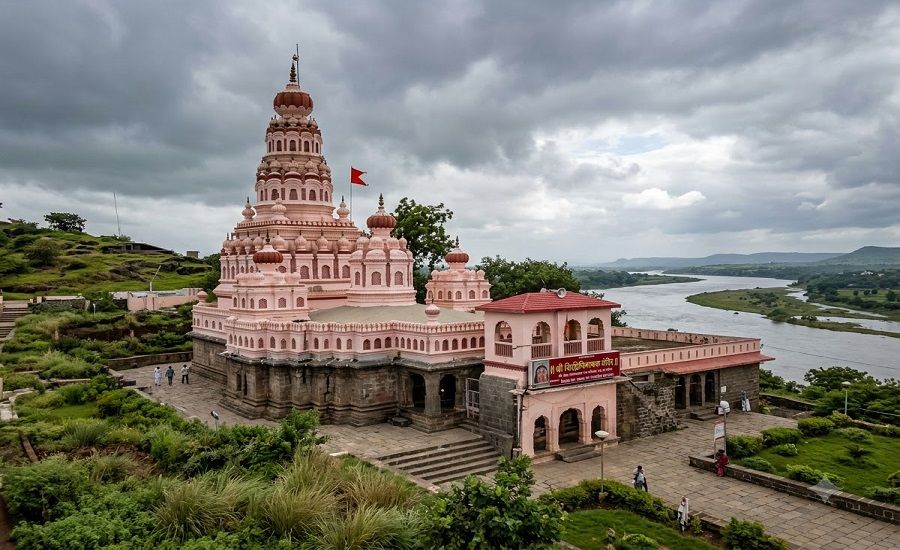
Vishnu Ji supposedly prayed to Ganesha on this hill by the Bhima river in Ahmednagar to get stronger to beat demons Madhu and Kaitabha.
What's weird about this idol? Its trunk goes right, not left. Most Ganesh idols are left-trunked, which is meant to be a tougher, more powerful form that needs extra careful worship. People say this is one of only two Ashtavinayak idols with a right-turned trunk.
3. Ballaleshwar (Pali)
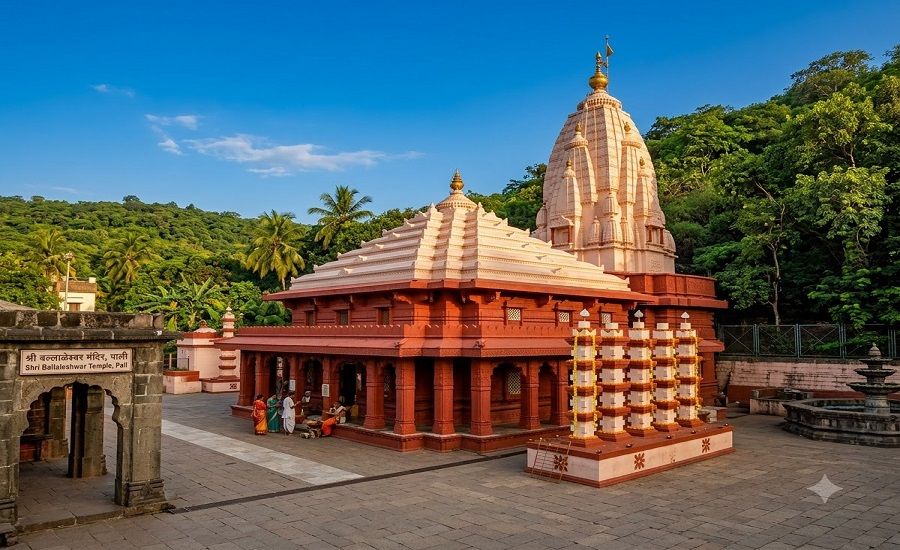
This temple is the only one here named for a follower, not Ganesha. The story goes that a kid named Ballal loved Ganesha so much he skipped his studies and chores. His dad got mad, beat him, and tossed his prayer stone. Ganesha showed up to save him. At Ballal's request, Ganesha agreed to hang out in Pali and the place was named after him.
The temple faces east. Sunrise hits the idol just right on some mornings. People often plan their trips to see it. It's made of black stone and is in Raigad district.
4. Varadvinayak (Mahad)
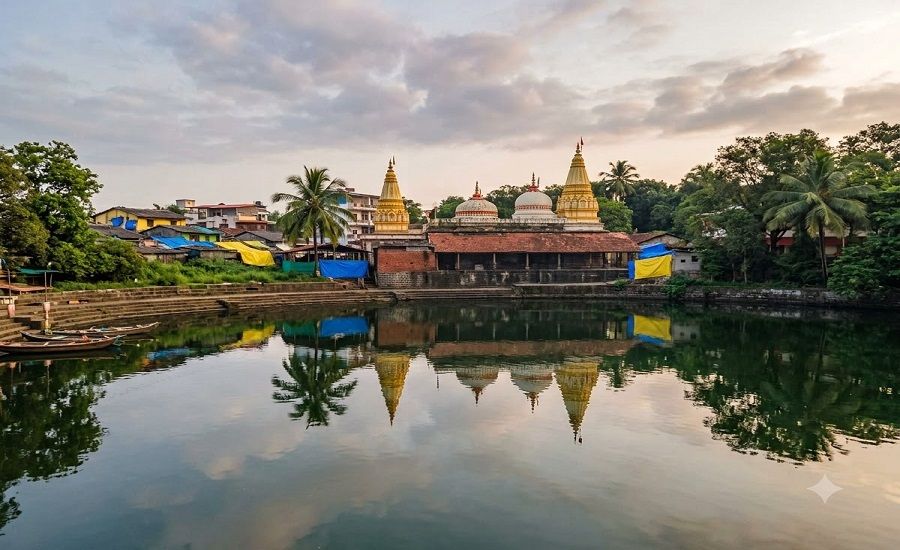
Also in Raigad district, this temple's name means Ganesha who gives gifts. The legend is that sage Grutsamada was trying to make up for a curse here. Ganesha appeared and granted his wishes, which is why it's called Ganesha bestowing.
It's a smaller, simpler temple than some others. You'll know it by its gold dome, added later by people who visit. There's a natural pond nearby, Dhundi Teerth. People see dipping there as sacred before entering the temple.
5. Chintamani (Theur)
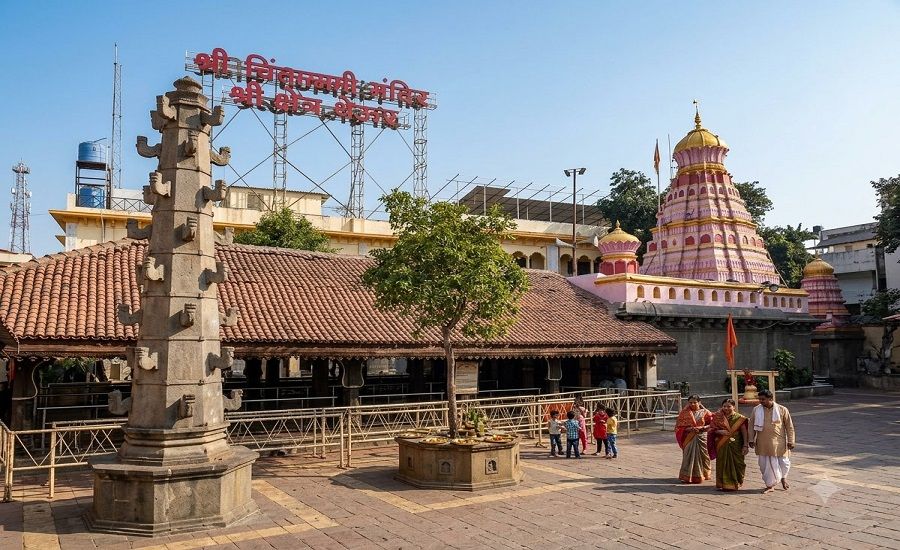
This one's near Pune, by the Mula-Mutha river. The story here involves sage Kapila, who had a valuable gem, the Chintamani. It got stolen. Ganesha got it back and gave it to him. But Kapila said Ganesha should keep it, so the idol wears the Chintamani jewel around its neck.
This temple connects to the Peshwa era. Madhavrao Peshwa, a Maratha ruler, was devoted and supposedly died on the temple grounds. You can see some old artifacts and buildings from that time around the complex.
6. Girijatmaj (Lenyadri)
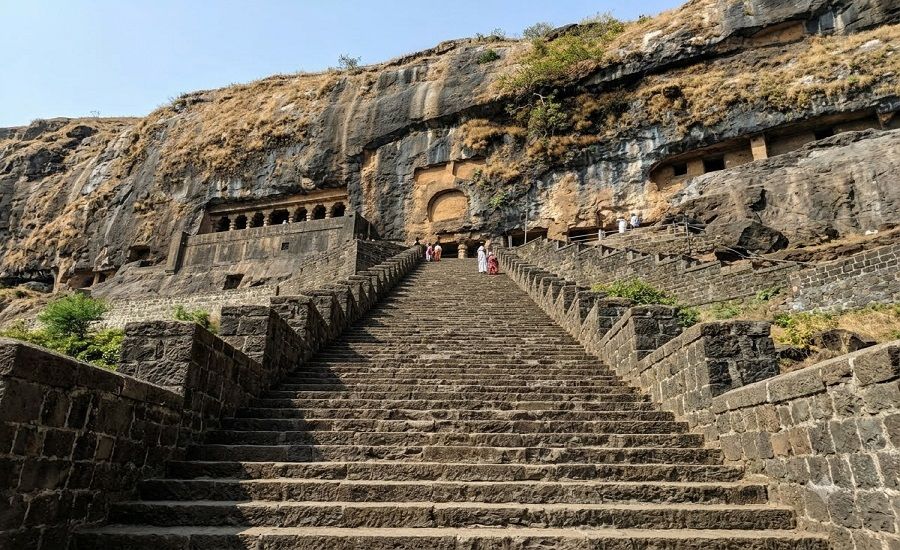
This one looks really different. It's inside a rock cave on a hillside. It's part of a bigger group of old Buddhist caves that are about 2,000 years old. You have to climb around 300 stone steps to reach the main shrine.
Girijatmaj means "son of Girija (Parvati)." Parvati is said to have meditated in this cave hoping to get Ganesha as her son. This temple is unlike the others on the Ashtavinayak circuit; no priest performs daily rites. Worship here feels more like you do it yourself.
7. Vighnahar (Ozar)
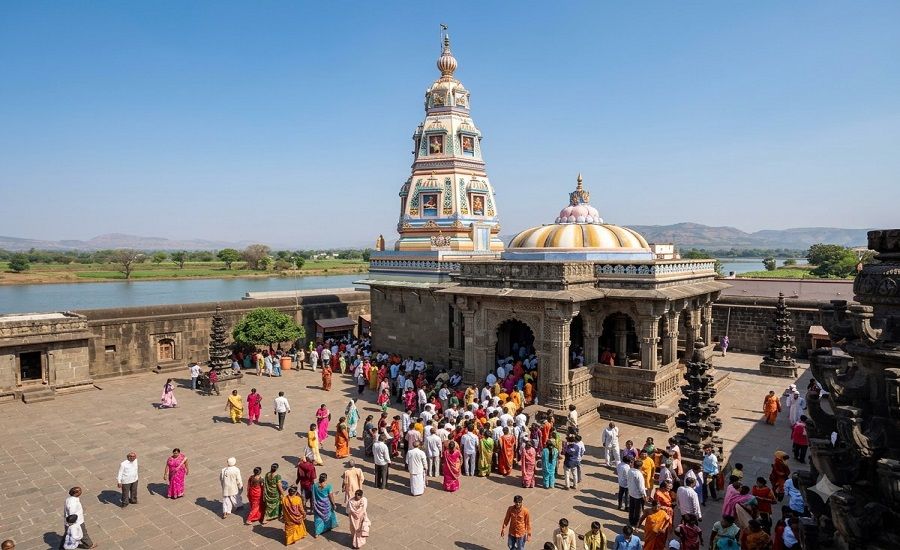
This temple sits by the Kukadi river. Vighnahar means 'remover of obstacles.' Legend says Ganesha beat a demon, Vighnasura, who was messing with sages. Ganesha said he'd stay if people remembered him before starting anything. That's partly why he's known as the remover of obstacles in Hindu tradition. A Peshwa nobleman supposedly put a diamond on the idol's forehead. This temple is pretty large, bigger than some of the smaller Ashtavinayak shrines, and has a big courtyard.
8. Mahaganpati (Ranjangaon)
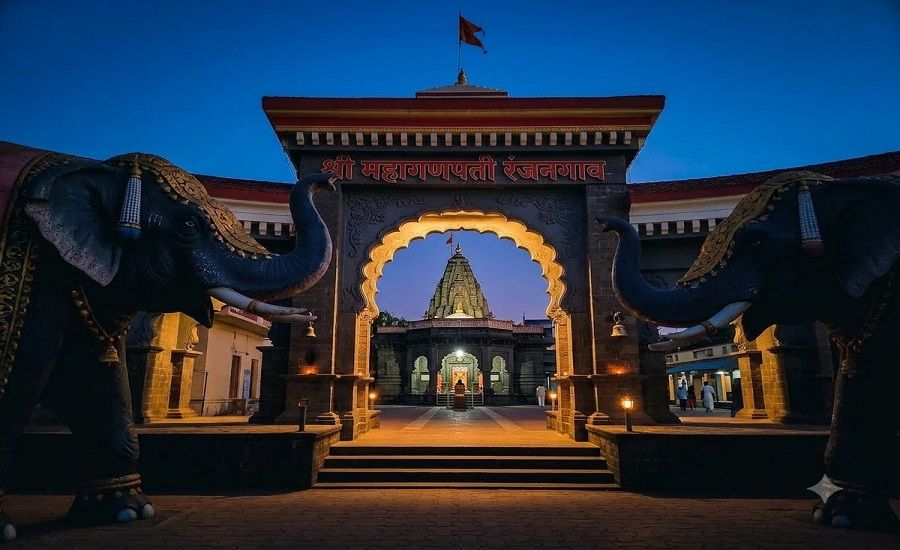
Often the last place visited, this temple's legend involves Shiva. Shiva supposedly prayed to Ganesha here for success before he fought Tripurasura. That's where "Mahaganpati" (great Ganesha) comes from. Some pictures show the idol with many arms, looking pretty impressive. The current building is newer, but people have been worshipping here for a long time. It's not far from the Pune-Ahmednagar highway, making it a good first or last stop.
Why a Cab Works Better Than Public Transport for This Circuit
The temples are scattered down winding roads, through little towns and country areas with patchy bus service. A private taxi cuts out most of the hassle of using public transport.
Door-step pickup and drop
You get picked up and dropped off right at your door. Your cab shows up at your house, hotel, or station. No lugging bags between bus stops and lingering in confusing places waiting for the next bus.
A route planned around temple darshan timings
The route is planned around when you can actually see the deities. Drivers who know this circuit understand which temples get busy at certain times, which roads get jammed on festival weekends, and where stopping for a bit makes sense. This helps you plan your day way better than a fixed bus itinerary would.
One vehicle for the entire trip
Families, senior citizens, and groups travelling together avoid repeated transfers between different local vehicles, which matters a lot on a multi-day yatra where comfort and continuity count for more than saving a few rupees on a shared jeep.
Flexibility to pause, extend, or adjust the plan
If a temple queue is longer than expected, or you'd like extra time for a meal or a local market stop, a private cab lets you adjust the day without affecting anyone else's schedule.
Safer travel after dark or on hill sections
Some stretches of this route pass through hilly and poorly lit sections, particularly near Lenyadri and Ozar. An experienced driver on a private taxi booking is generally a safer option than waiting for late-evening public transport in unfamiliar towns.
Ashtavinayak Yatra Route: Distances and Approximate Travel Time
Below is an approximate distance chart between consecutive temples when travelling in the traditional order. Actual distances may vary slightly depending on the exact road taken and ongoing construction or diversions.
| Route Segment | Approx. Distance | Approx. Drive Time |
|---|---|---|
| Pune to Morgaon | 65 km | 1.5 hrs |
| Morgaon to Siddhatek | 115 km | 2.5 hrs |
| Siddhatek to Pali | 165 km | 4 hrs |
| Pali to Mahad | 40 km | 1 hr |
| Mahad to Theur | 120 km | 3 hrs |
| Theur to Lenyadri | 90 km | 2 hrs |
| Lenyadri to Ozar | 10 km | 20 mins |
| Ozar to Ranjangaon | 55 km | 1.5 hrs |
| Ranjangaon back to Pune | 50 km | 1 hr |
Suggested Itineraries for the Ashtavinayak Yatra
Most people do the Ashtavinayak yatra in 2 or 3 days. You can do it in one day if you're super determined, and you start before dawn. Smaller groups, no old folks or kids, basically.
1-Day Express Plan (for the very determined)
Start from Pune before 4 a.m., covering Morgaon, Theur, Ranjangaon, Ozar, and Lenyadri first since they are closer together, before pushing on to Siddhatek, Pali, and Mahad. This plan involves long hours on the road and is only practical for smaller groups without elderly travellers or young children.
2-Day Balanced Plan (most common choice)
The two-day plan is what most people do.
- Day one is Pune to Morgaon, Siddhatek, Pali, Mahad. You'd crash near Mahad or Pali.
- Day two, you do Mahad, Theur, Lenyadri, Ozar, Ranjangaon, and get back to Pune by evening.
3-Day Relaxed Plan (recommended for families and senior citizens)
If you've got family or older relatives, three days is better.
- Day one: Pune to Morgaon to Siddhatek, stop near Siddhatek or Pali.
- Day two: Pali to Mahad to Theur, sleep near Theur or on the way back to Pune.
- Day three: Lenyadri, Ozar, Ranjangaon, then back to Pune with time for a meal or some shopping. This way you're not rushing the temple visits, and everyone gets enough rest.
A 3-day plan leaves comfortable time at each temple, avoids rushing through darshan, and gives elderly or younger travellers proper rest between long drives.
One-Way Taxi Booking for Ashtavinayak Yatra
People are booking one-way taxis more now for this trip, instead of round trips. This is smart if you're flying into or out of Pune or Mumbai, or heading elsewhere right after. With CabBazar, you just pay for the distance you actually go, one way. The driver doesn't have to wait around for you to head back.
One-way booking is especially useful for:
- It's perfect for people coming from another city and just needing a ride to the temples.
- If you're linking the yatra with Shirdi, Alibaug, or Mahabaleshwar.
- Solo travelers or small groups who don't need the car waiting really benefit.
- Same if you're catching a flight out of Pune or Mumbai straight after.
One-way pricing is different from round trips. Usually, operators build the empty return drive into their round-trip costs. Make sure you ask if your quote is a real one-way price.
One-Way vs Round Trip: Which Should You Choose?
If you start and end in the same town, and it's just a simple out-and-back, a round trip usually makes more sense. The car and driver stick with you the whole time. But if you're going from one city to another and not coming back, or going somewhere else afterwards, booking a one-way means you don't waste money on the empty return drive.
Vehicle Options for Your Ashtavinayak Cab Trip
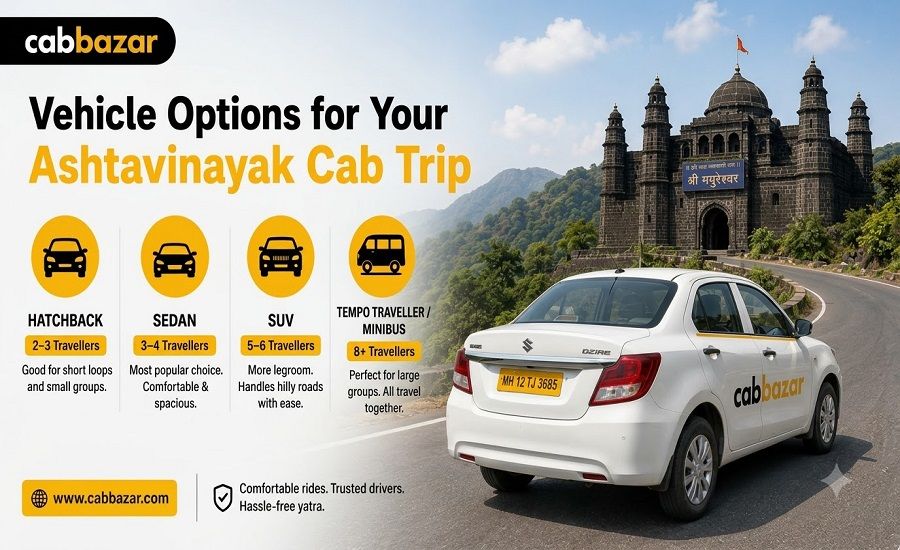
CabBazar has different kinds of cars for this trip. You can choose based on how many people you have, how comfy you want to be, and how much stuff you're bringing.
Hatchback (2–3 travellers)
This is a good, efficient choice if you're by yourself or with one other person and just doing a shorter loop.
Sedan (3–4 travellers)
Most people book this for the yatra. It's a decent middle ground; comfortable and has enough space for a few days of bags.
SUV (5–6 travellers)
Better if you have older folks or little kids with you. There's more legroom and it handles the bumpier bits, like near Lenyadri, a bit better.
Tempo Traveller / Minibus (8+ travellers)
It is perfect for a big family or a group of friends doing the trip together. It keeps everyone in one van and a lot less hassle than splitting into smaller cars.
What Decides Your Trip Cost
The price you get for this yatra depends on a few things. Knowing this helps you understand what you pay for before you book.
- How many kilometers total, based on where you start and the route you take.
- How many days the car and driver are with you.
- The car type - hatchback, sedan, SUV, or a bigger van for more people.
- Driver expenses for overnight stays.
- Toll fees and parking costs along the way.
- Whether it's a one-way trip or a round trip.
- When you travel - festival weekends and Ganesh Chaturthi week mean more demand and higher prices.
CabBazar breaks down all these costs on your quote. Nothing unexpected pops up later. We don't do fancy sales or limited-time deals. Our idea is to keep prices fair and open for everyone, all year round. What you see on the quote is what you pay. Tolls and driver pay are listed separately, not hidden in one big number.
How to Book Your Ashtavinayak Yatra Taxi
CabBazar offers a few simple ways to complete your cab booking, so you can pick whichever is fastest for you.
Book via WhatsApp
WhatsApp is probably the fastest for most people. Just text your travel date, where you're starting, and how many people are going to their WhatsApp number. They'll send you quotes on a vehicle in minutes. You get payment info and driver details in the same chat. No app needed, no long forms. This one's great if you need a cab last minute or are on the go and don't have time to mess with a website.
Book through the mobile app
There's also the CabBazar app. It lets you see what cars are free, compare them, and watch your driver on a map when your trip starts. If you use the app, you can see your past trips, rebook faster for your way back, and get top priority for help during yatra season when things get busy. The app is a good move if you're planning a few days or weeks ahead and want to see all your vehicle choices next to each other.
Book on the website or by phone
If you like using a website or just want to call, those options are still there. You'll get the same clear quote you'd see on WhatsApp or the app. Calling is especially helpful for older travelers who'd rather chat with someone directly than type everything out.
What to keep ready before you book
- Your starting city and where you want to be picked up.
- The date and rough time for pickup.
- How many people are traveling and how much luggage you have.
- If it's one way or round trip.
- If it's a multi-day trip, how many days you need the car.
Best Time to Plan Your Ashtavinayak Yatra
When to plan your Ashtavinayak Yatra trip depends a bit on the weather. You can technically go anytime, but keep these things in mind for booking.
Monsoon months (June to September)
During the monsoon (June to September), the roads can get slippery, especially near Mahad and Lenyadri. Having a driver who knows those ghat roads well in the rain is a big plus.
Ganesh Chaturthi period
Ganesh Chaturthi is the absolute busiest time. Expect way more people at the temples and longer waits to get inside. If you plan to travel then, book your cab way ahead of time.
Winter months (November to February)
This is typically the best time to go. The days are nice and temperatures aren't too high, plus it's less humid. Traveling in winter makes the long drives between temples way less tiring.
Temple Etiquette and Practical Tips
- Get going early to skip the long prayer lines and the brutal midday sun.
- Keep small bills handy for donations or any vendors.
- Make sure your shoulders and knees are covered when you dress.
- You'll probably take your shoes off, so a small bag or slip-on shoes makes sense.
- If you're stretching this trip out, book your hotel early.
- Tell your driver if you want more time at a specific temple.
- Confirm your hotel booking the day before, especially if there's a festival happening.
- If older relatives are coming along, pack some basic meds because you'll be driving for many hours.
Why Travellers Choose CabBazar for the Ashtavinayak Yatra
We've been doing this, both for trips out of town and for pilgrimages, for more than ten years. We do this Ashtavinayak route all year, not just during peak times. Our drivers know the order of the temples, where the good places to stop are, and which roads get jammed on festival weekends.
- We've done temple trips and long Maharashtra drives for a decade.
- Our drivers are checked out and know the Ashtavinayak circuit.
- We've got good cars, from sedans to SUVs and vans, all clean and kept up.
- Book anytime, day or night, via phone, WhatsApp, or our app.
- We've done millions of trips on Maharashtra's pilgrimage roads and other long hauls.
- You get a clear price upfront, all costs shown, zero surprises.
We don't do special deals as our prices are just plain consistent. We figure everyone should get our best honest price right away, not chase a coupon. That's why regular pilgrimage travelers around Maharashtra rely on us. A lot of them book again for other routes like Shirdi, Trimbakeshwar, and the Jyotirlinga trips. Start Planning Your Ashtavinayak Yatra Today!
Install App & Book Ashtavinayak Yatra Cab