
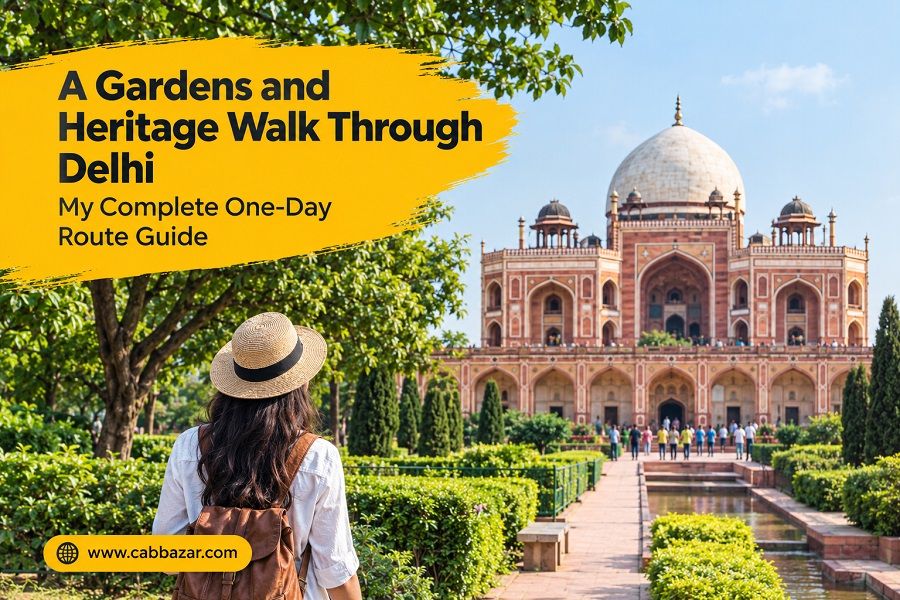
The first time I really did this route, I kicked off from Nizamuddin before eight in the morning. It was still dim out, and the only sounds by Humayun's Tomb were birds and a scooter outside. I remember thinking that people who only see Connaught Place, a mall, and the airport really miss out on the Delhi that explains why it's been a capital for eight hundred years.
This is the route I take when a friend, a visiting cousin, or a colleague with one day between meetings asks for Delhi tips. It links gardens and monuments that are actually pretty close. You won't spend the day just sitting in a car watching miles tick by instead of the city.
It's like four or five stops, depending on how much energy you have and the time of year. I'll map it out roughly how I'd go, with real tips on tickets, hours, and getting between places without losing the day in traffic or hassling a rickshaw man.
Plan Your Delhi Sightseeing Cab →Why a Gardens-and-Heritage Day Beats the Usual Delhi Checklist
Most of Delhi's famous monuments started out as gardens first, tombs second. The Mughals took the Persian charbagh idea - a square garden split by water channels, meant to be paradise - and used it for almost every big tomb in the city. Once you get that, walking through Humayun's Tomb or Lodhi Garden feels less like a history lesson and more like strolling through some really old, carefully planned landscaping.
The other reason this works for a single day is where things are. Sunder Nursery, Humayun's Tomb, Lodhi Garden, and Safdarjung's Tomb are pretty close along that Nizamuddin-Lodhi Road stretch. Qutub Minar is a little further south in Mehrauli, but it's doable if you start super early and don't dawdle too long at lunch.
Building a Realistic One-Day Delhi Heritage Sightseeing Route
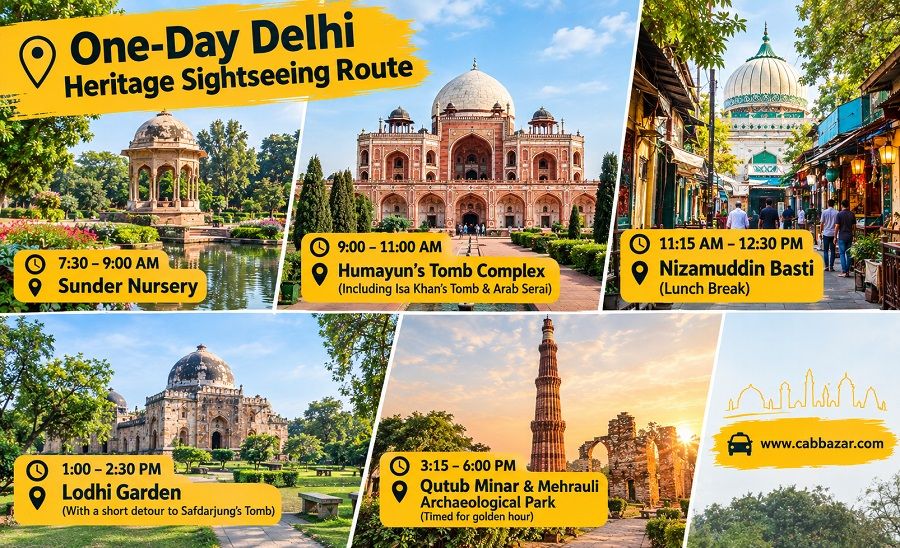
Here's my timing, starting around 7:30 AM. If you're not an early bird, just push everything back an hour. You'll swap that quiet, soft light for more heat and people.
- 7:30 - 9:00 AM: Sunder Nursery (quiet, best light, good for photos)
- 9:00 - 11:00 AM: Humayun's Tomb complex, including Isa Khan's Tomb and Arab Serai
- 11:15 AM - 12:30 PM: Lunch break in Nizamuddin Basti
- 1:00 - 2:30 PM: Lodhi Garden, with a short detour to Safdarjung's Tomb
- 3:15 - 6:00 PM: Qutub Minar and Mehrauli Archaeological Park, timed for golden hour
If that feels like too much walking for one day, drop Qutub Minar and end at Lodhi Garden. It's a peaceful place to close out an afternoon, and you can always add Mehrauli on a separate short trip.
Sunder Nursery

Sunder Nursery doesn't get much foot traffic, not like Humayun's Tomb right next door. That's actually why I like starting here. It's this huge heritage park, 90 acres. It has 16th-century buildings, like the Sunder Burj and the Chota Batashewala complex. It was pretty run down for ages until the Aga Khan Trust and the Archaeological Survey of India fixed it all up and opened it again a few years back.
Besides the old buildings, there's a working nursery, an open-air theatre, and a lake with paddle boats. There are so many trees, they've recorded over eighty different kinds of birds. Mornings are really the best time to go. The light's nice for photos, and you don't have the crowds of joggers and school groups yet.
| Visitor Category | Entry Fee per Person |
|---|---|
| Indian / SAARC visitors | ₹50 |
| Foreign tourists | ₹200 |
| Children 5–12 years | ₹25* |
| Children below 5 years | Free |
| Differently-abled visitors | Free |
They do change the prices sometimes, so it's a good idea to check the official website or ask your hotel before you head over. Don't just trust an old price you heard.
Humayun's Tomb

Humayun's Tomb itself was commissioned in the 1560s by Empress Bega Begum for her husband, Emperor Humayun. It's often called the first big garden-tomb in Mughal India. Lots of people say it's what the Taj Mahal in Agra was based on. It's been a UNESCO World Heritage Site since 1993. Honestly, though, the charbagh garden around it is just as much the reason to be here as the tomb.
Walk along the raised sandstone paths by the water channels. You'll pass Isa Khan's Tomb, which is older, built before the Mughals, with its own garden. Then there's the Arab Serai, which was originally built to house Persian workers who helped build the site. You really need at least ninety minutes here. If you rush it, you miss the point.
Entry details worth knowing before you go
| Entry Detail | Current Rate / Information |
|---|---|
| Indian Nationals | ₹35 per person |
| Foreign Nationals | ₹550 per person |
| SAARC/BIMSTEC Nationals | ₹35 per person |
| Children below 15 | Free |
| Video Camera | No additional charge reported |
| Timings | Open daily, from around sunrise to sunset |
Booking your ticket online through the official ASI site saves you from waiting in line, especially on weekends. It takes about five minutes and is definitely worth doing the night before.
A Midday Pause: Eating Well Near Nizamuddin Basti
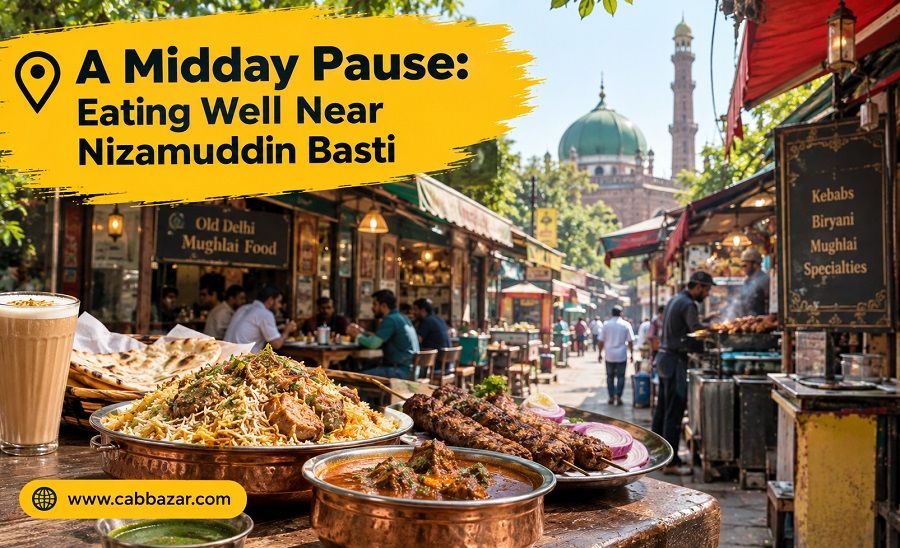
Walking around Nizamuddin Basti, just past the tomb itself, you'll find a serious food area. Think kebabs, biryani, and slow-cooked Mughlai stuff from places that have been going for ages. It's walkable from the monument, so you can just sit down, eat, and skip getting back in a car during the worst part of the day heat-wise and traffic-wise.
Lodhi Garden

Lodhi Garden is kind of where Delhi actually lives, with 500-year-old tombs scattered around. It's free, open all day, and mostly locals are there. You'll see joggers, people walking in the morning, couples on benches, and sometimes a game of cricket spilling onto the grass.
Safdarjung's Tomb

Safdarjung's Tomb is about ten minutes from Lodhi Garden's south gate. It was built in the mid-1700s and people say it's the last of the big Mughal garden tombs before the empire started to fade. Way fewer people go here than to Humayun's Tomb, so it's a chill thirty to forty minutes if you've got some extra time before heading further south.
Qutub Minar and Mehrauli Archaeological Park
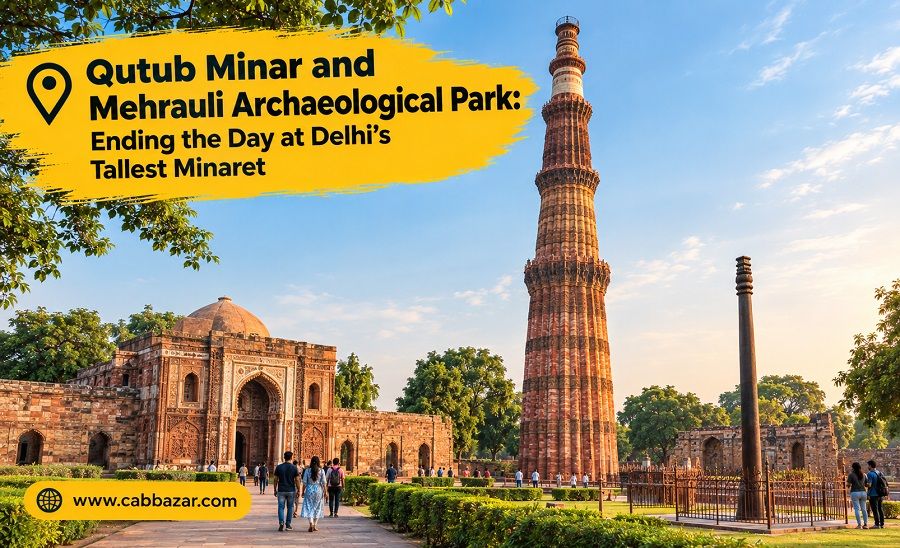
If you still have light and energy, Qutub Minar is a strong way to wrap up the day. Building started in 1199. It's about 73 meters tall, which makes it the tallest brick minaret on earth. The area around it has the Quwwat-ul-Islam Mosque, the really detailed Alai Darwaza, and that famous Iron Pillar that's been standing mostly rust-free for over a thousand years.
What to know before you head there
| Entry Detail | Current Fee / Information |
|---|---|
| Indian Nationals | ₹50 |
| SAARC & BIMSTEC Nationals | ₹50 |
| Foreign Nationals | ₹600 |
| Online Ticket – Indian/SAARC/BIMSTEC | ₹35 |
| Online Ticket – Foreign Nationals | ₹550 |
| Children Below 15 | Free |
| Timings | Open daily, generally from sunrise to 8:00 PM |
Mehrauli is a decent trek from the Lodhi Road area, so give it an hour, especially with traffic. This part of the day really benefits from an early start.
Getting Between These Gardens Without Losing Half Your Day to Traffic
It is almost twenty kilometres one way, and Delhi metro, as brilliant as it is for travelling directly to one place and another, isn't a structure meant for a whole day of jumping around from park to park with camera, bottles of water and tired legs. You will have to do in-between-line transfer and 10-15-minute legged strolls in the sun between each of the places, which reduces the time you could have spent exploring the monuments.
This is where hiring a car for the day genuinely changes the experience. Instead of planning your route around metro lines, you plan it around opening hours and light, and let the driver handle the rest.
Why CabBazar Works Well for a Route Like This

For a day like this, CabBazar offers local sightseeing packages built around hours and kilometres rather than a fixed round-trip package, so you're not paying for distance you didn't need. You tell the driver the stops, keep the car waiting while you're inside each garden, and move on whenever you're ready without re-booking, no standing at a taxi stand outside Qutub Minar hoping someone's available.
A lot of people doing exactly this route aren't Delhi residents. They're travellers with a layover, a same-day stop between a flight and a train, or a morning free before heading onward to Agra or Jaipur. For that traveller, paying for a full round trip back to a starting point they're not returning to doesn't make sense.
One-Way Taxi Booking: the Smarter Choice for a Single-Day Circuit
This is exactly the gap one-way taxi booking fills. With CabBazar, you can book a one-way cab from the airport straight to Sunder Nursery in the morning, keep the same car (or a fresh one) for the sightseeing loop, and end your day with a one-way drop at the railway station, a different hotel, or straight back to the airport without paying for a return leg to a point you never go back to. It's a meaningful difference on the amount you end up spending compared with a standard return package, especially if your onward journey is to another city entirely.
Booking on WhatsApp: No App Download, No Back-and-Forth Calls
CabBazar also takes bookings directly over WhatsApp, which turns out to be the easiest option for a lot of travellers especially anyone visiting from outside India who doesn't want to explain an address over a patchy phone call. Drop a pin, mention your stops and rough timing, and you'll get a confirmed vehicle, driver details, and an all-inclusive quote back in minutes, all in the same chat thread you can refer back to through the day.
Book Your Cab on WhatsAppExtra Benefits When You Book Through the Mobile App

If you'd rather book ahead of time, the CabBazar mobile app adds a few things WhatsApp booking doesn't: live tracking of your driver, saved pickup addresses for your hotel and the airport, a ride history that's handy if you need it for expense claims, and app-only discounts that tend to apply especially well to one-way and outstation bookings. Frequent visitors also collect loyalty benefits that make the next trip a little cheaper to arrange.
Whichever way you book, the point is the same: fix your vehicle and your rate before you start the day, so you're not negotiating with an unmetered auto outside a monument gate in the middle of your sightseeing, and you're not stuck waiting for a ride-hailing app to find a driver during Delhi's evening surge hours.
A Few Things I'd Tell a First-Timer Doing This Route
- Best months: October to March, when mornings are cool enough to actually enjoy the walking.
- Check weekly-off days: most of these sites open daily, but a few ASI-protected monuments occasionally close for maintenance, so a quick check the day before saves a wasted trip.
- Carry small cash for gate tickets and water, even if you've booked your main tickets online.
- Wear shoes you can actually walk in as this is a walking day, not a photo-stop day.
- Take a 30-45 minute buffer between stops for Delhi traffic, especially around midday and early evening.
- Start earlier than regular as the light, the temperature, and the crowd levels are all better before 9 AM.
Before You Head Out
This route has become my default answer whenever someone asks what to actually do with one free day in Delhi. It's unhurried enough to enjoy, compact enough to finish without exhausting everyone, and it shows a side of the city that a lot of first-time visitors never go to quiet gardens, working monuments, and a few hundred years of history you can literally walk through.
Sort your transport out before you leave the hotel with a quick message to CabBazar on WhatsApp or a booking through the app and the rest of the day takes care of itself.
Install App & Book your Local Sightseeing Cab with CabBazar →